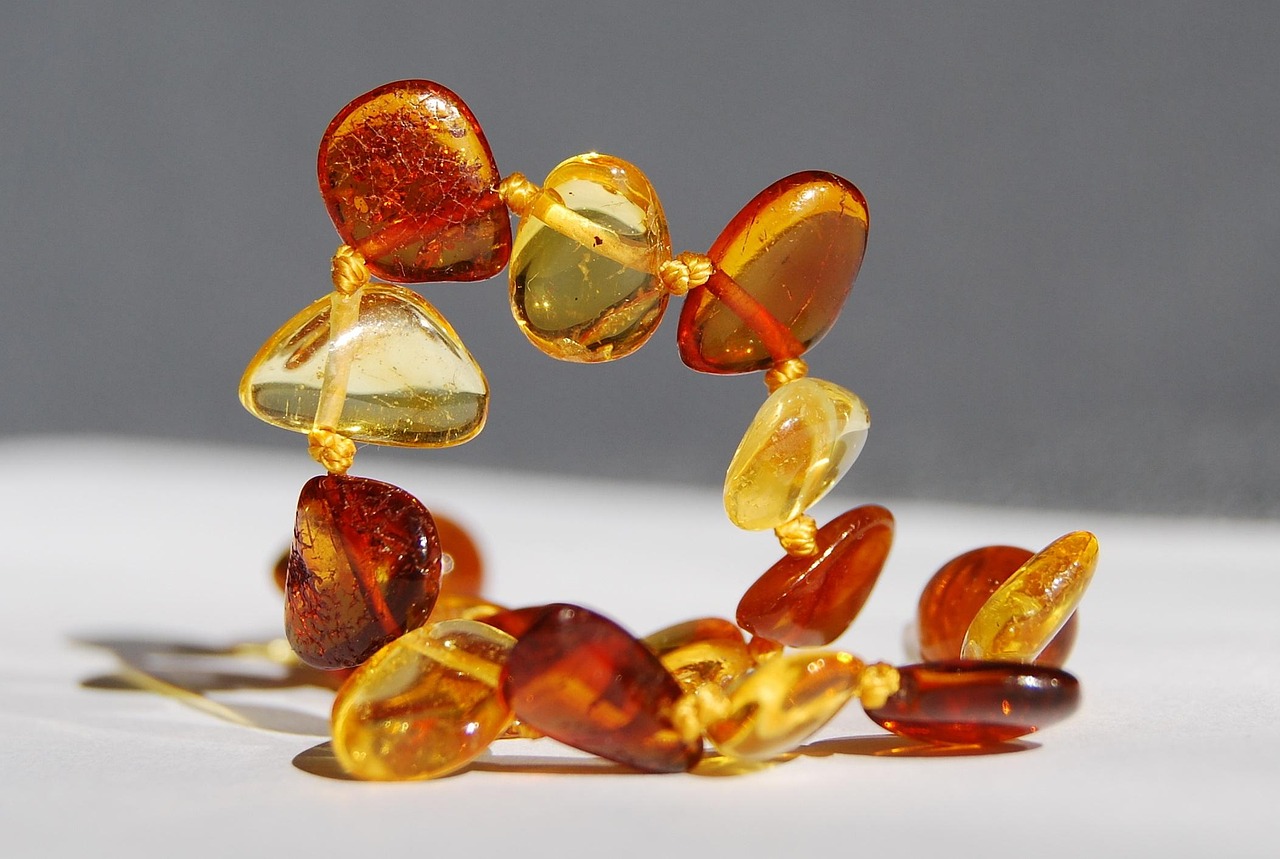






Amber: Natures Golden Time Capsule
Origin, Types, Locations, History, and Enduring Beauty of Amber in Jewelry
7/12/2026
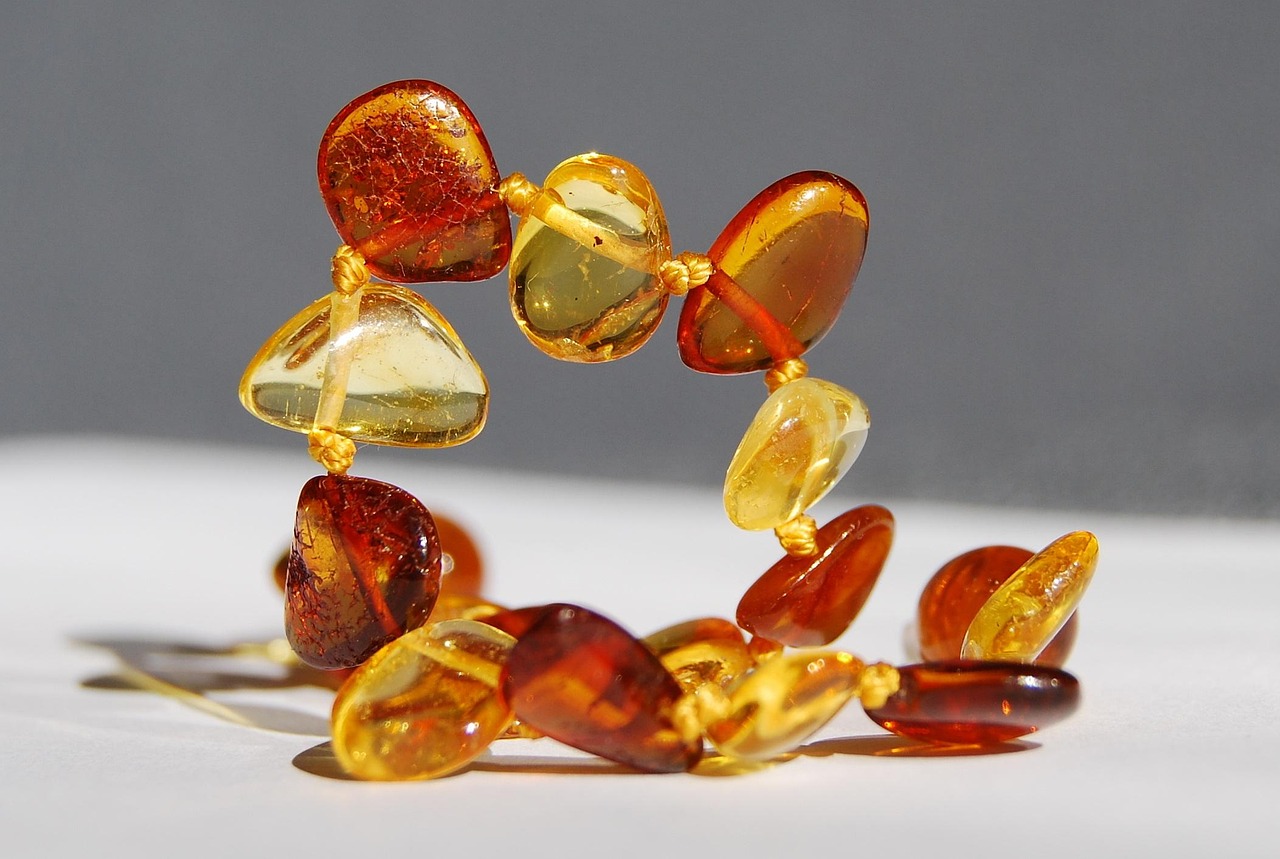
For thousands of years, amber has captivated civilizations with its warm glow, remarkable beauty, and mysterious origins. Unlike diamonds, sapphires, or emeralds, amber is not a mineral formed deep within the Earth. Instead, it is the fossilized resin of ancient trees, preserving tiny moments of prehistoric life within its golden depths. Holding a piece of amber is like holding a fragment of history—one that may have begun forming over 100 million years ago.
From the tombs of Egyptian pharaohs to the royal courts of Europe, amber has been treasured not only as an ornament but also as a symbol of protection, healing, wealth, and prestige. Today, it continues to enchant collectors, jewelers, scientists, and anyone fascinated by nature's artistry.
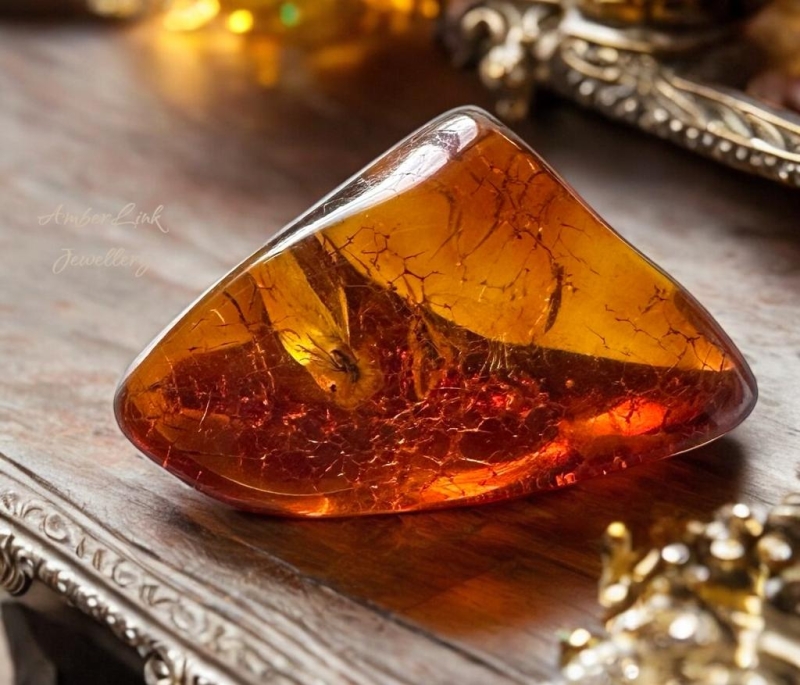
Amber is fossilized tree resin that has undergone millions of years of chemical transformation. It is important to distinguish resin from tree sap.
Tree sap carries nutrients throughout a tree, while resin is produced primarily as a protective substance. When a tree was injured by insects, storms, or disease, thick resin flowed over the damaged area, sealing the wound and protecting it from infection.
Over immense periods of time, some of this resin became buried beneath layers of sediment. Heat, pressure, and time slowly transformed it into the beautiful material we know today as amber.
Unlike gemstones that crystallize underground, amber is entirely organic.
The oldest known amber dates to over 300 million years ago, although most commercially available amber ranges between 20 and 100 million years old.
During the age of dinosaurs, vast forests covered much of the Earth. Resin flowed from ancient conifer trees, trapping insects, pollen, leaves, feathers, spiders, and even tiny reptiles.
Because resin hardened quickly, these organisms became encapsulated before decomposition could begin.
Today, amber provides scientists with one of the most remarkable windows into prehistoric ecosystems.
Some pieces preserve:
- Mosquitoes
- Bees
- Ants
- Butterflies
- Spiders
- Feathers
- Leaves
- Flowers
- Seeds
- Tiny frogs
- Lizards
- Air bubbles from ancient atmospheres
These inclusions have allowed paleontologists to study extinct species in extraordinary detail.
The formation of amber occurs over several stages.
- Trees produce resin.
- Resin flows onto bark or the forest floor.
- Insects and plant material become trapped.
- Resin becomes buried beneath sediment.
- Oxygen is excluded.
- Heat and pressure slowly polymerize the resin.
- Millions of years later, erosion exposes amber deposits.
Unlike many gemstones that require volcanic activity, amber owes its existence to forests and time.
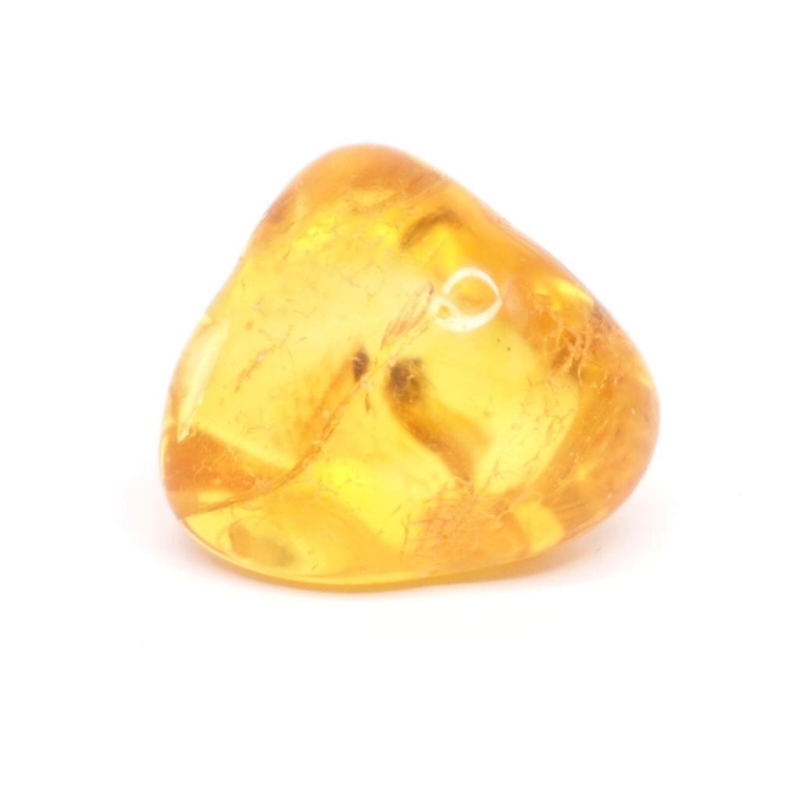
Amber appears in an astonishing range of colors.
Honey AmberThe classic golden-yellow variety.
Most recognized and widely used.
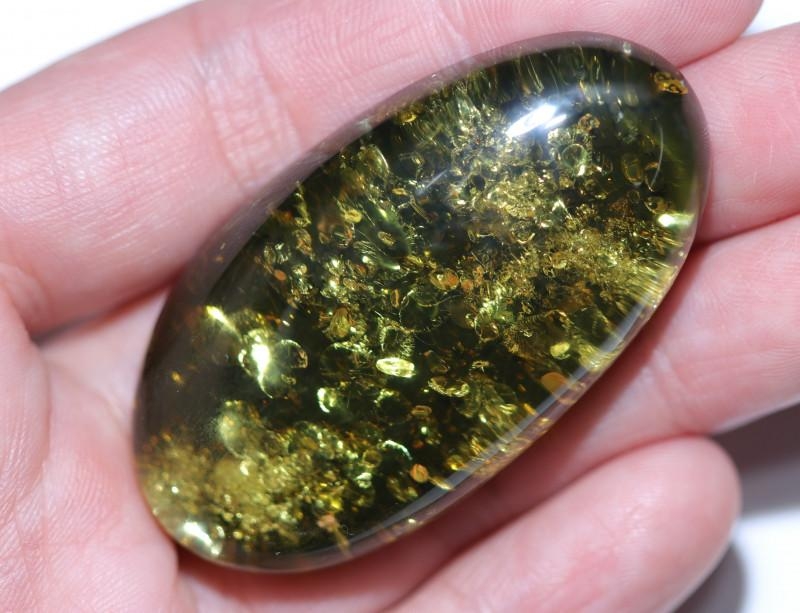 .
. 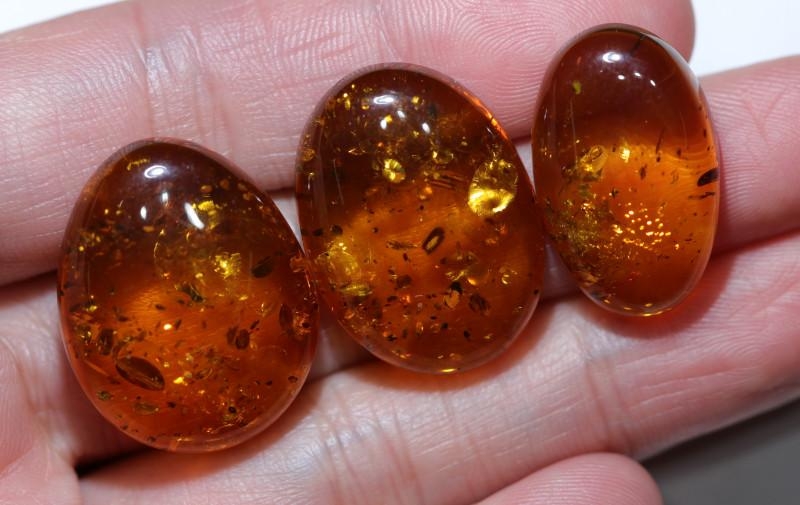
Rich reddish-brown tones.
Especially popular in luxury jewelry.
Butterscotch AmberCreamy yellow.
Highly prized among collectors.
Bright translucent yellow.
Often displays remarkable clarity.
Deep red.
Some natural, though many modern examples are heat-treated.
Usually formed through natural oxidation or mineral influences.
Less common than yellow varieties.
Among the rarest forms.
Appears yellow indoors but glows brilliant blue under sunlight or ultraviolet light.
Found primarily in the Dominican Republic.
Sometimes called "Royal Amber."
Opaque and highly collectible.
Actually very dark brown rather than true black.
Usually opaque.
The world's most famous amber.
Approximately 90% of all amber sold today originates from the Baltic region.
Countries include:
- Poland
- Lithuania
- Latvia
- Estonia
- Russia (Kaliningrad)
Age:
Approximately 44 million years.
Baltic amber contains unusually high levels of succinic acid, leading to the name "succinite."
Famous for:
- Exceptional clarity
- Rare blue coloration
- Beautiful insect inclusions
Age:
15–20 million years.
Often considered among the finest amber for collectors.
Burmese AmberFound in Myanmar.
Much older than Baltic amber.
Estimated age:
Around 99 million years.
It frequently contains extraordinarily preserved dinosaur-era insects.
Primarily from Chiapas.
Usually displays:
- Rich golden color
- Green tones
- Excellent transparency
Amber has also been found in:
- Canada
- United States
- Ukraine
- Romania
- Indonesia
- New Zealand
- Sicily
- Lebanon
- France
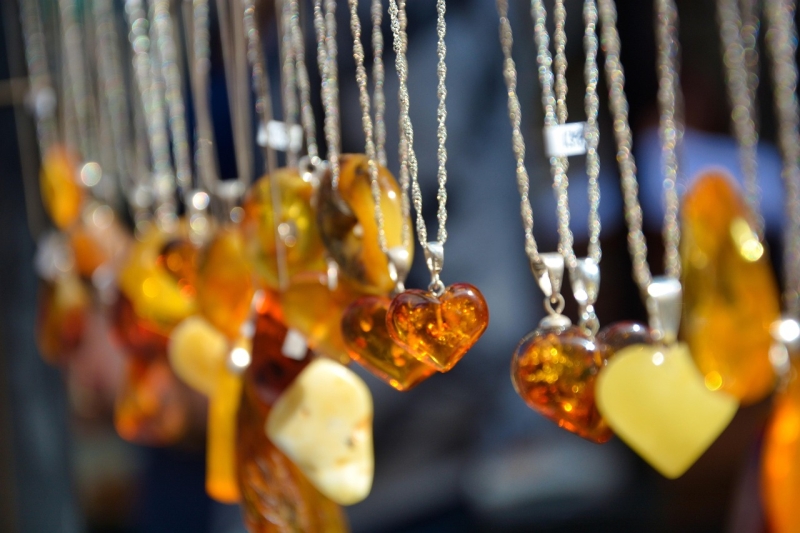
Amber has fascinated humanity for over 5,000 years.
Amber beads have been discovered in royal tombs.
It was believed to protect the soul during the afterlife.
The Greek word "elektron" referred to amber because rubbing it produced static electricity.
The modern word "electricity" ultimately derives from this ancient observation.
Roman EmpireRoman nobles valued amber so highly that pieces could sell for more than healthy slaves.
Amber was imported along famous trade routes called:
The Amber Roads.
VikingsAmber became an important trade commodity throughout Northern Europe.
It was fashioned into:
- Amulets
- Rosaries
- Decorative carvings
- Jewelry
Amber symbolized:
- Courage
- Prosperity
- Longevity
It was frequently carved into Buddhist prayer beads.
Perhaps the greatest amber artwork ever created was the legendary Amber Room.
Constructed during the early 1700s for Prussian royalty, the room contained over six tons of carved amber panels accented with gold leaf and mirrors.
Later presented as a diplomatic gift to Russia's Tsar Peter the Great, it was installed in Catherine Palace near St. Petersburg.
During World War II, Nazi forces dismantled the room and transported it to Königsberg.
Its ultimate fate remains one of history's greatest mysteries.
Some believe it was destroyed.
Others believe portions remain hidden.
A painstaking reconstruction now exists in Russia.
Amber jewelry has remained fashionable for centuries because no two pieces are identical.
Popular jewelry includes:
- Necklaces
- Bracelets
- Earrings
- Rings
- Pendants
- Brooches
- Rosaries
- Cufflinks
- Hair ornaments
Its warm colors complement both gold and sterling silver settings.

Luxury designers often combine amber with:
- Diamonds
- Pearls
- Gold
- Platinum
- Ebony
- Ivory substitutes
- Exotic woods
Master craftsmen transform rough amber into:
- Cabochons
- Cameos
- Animal sculptures
- Religious figures
- Chess sets
- Prayer beads
- Decorative boxes
Because amber is relatively soft, it can be carved into intricate forms impossible with harder gemstones.
Amber has revolutionized paleontology.
Researchers study inclusions to understand:
- Ancient climates
- Evolution
- Extinct insects
- Plant life
- Forest ecology
- Continental drift
Amber frequently preserves microscopic details impossible to find in ordinary fossils.
Popular culture, especially the novel and film Jurassic Park, imagined extracting dinosaur DNA from mosquitoes trapped in amber.
While amber can preserve biological structures remarkably well, intact dinosaur DNA surviving for tens of millions of years has not been recovered. DNA degrades over time, making the fictional recreation of dinosaurs through amber-preserved mosquitoes scientifically implausible with current evidence.
Across many cultures, amber has long been associated with folk remedies.
Historically, people believed amber could:
- Calm anxiety
- Relieve pain
- Promote healing
- Protect against illness
- Bring good fortune
Amber teething necklaces have become popular in recent years, but medical organizations do not recommend them for infants because of choking and strangulation hazards, and there is no strong scientific evidence that they relieve teething pain.
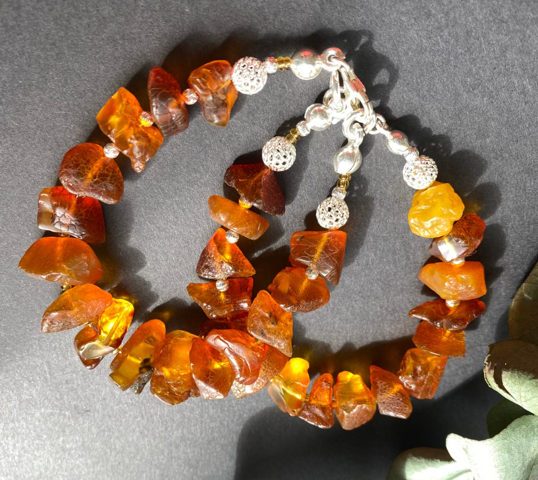
Amber requires more care than most gemstones.
To preserve its beauty:
- Clean only with a soft damp cloth.
- Avoid ultrasonic cleaners.
- Keep away from perfumes and hairsprays.
- Remove before swimming.
- Avoid prolonged exposure to heat.
- Store separately to prevent scratching.
- Polish occasionally using products designed specifically for amber.
Authentic amber generally:
- Feels warm rather than cold.
- Is lighter than glass.
- Often floats in saturated saltwater.
- Develops static electricity when rubbed.
- May emit a subtle pine-like scent if gently warmed (not burned).
Imitations are commonly made from:
- Plastic
- Copal (a much younger tree resin)
- Glass
- Resin composites
Professional gemological testing is recommended for valuable specimens.
Collectors appreciate amber because every piece tells a unique story. Some specimens are prized for their crystal-clear transparency, while others are sought for dramatic insect inclusions, unusual colors, or artistic carvings. High-quality Dominican blue amber, opaque royal amber, and Burmese amber with exceptionally preserved prehistoric life are among the most coveted and valuable.
Amber is far more than a beautiful ornament. It is a natural archive of ancient forests, preserving delicate traces of life from millions of years ago. Whether displayed as a museum specimen, crafted into a finely carved pendant, or worn as an elegant necklace, each piece represents an extraordinary journey through geological time.
Few natural materials combine scientific importance, artistic beauty, historical significance, and timeless elegance as seamlessly as amber. From prehistoric resin flowing down the bark of ancient trees to the polished jewelry displayed in today's finest boutiques, amber remains one of nature's most remarkable treasures—a golden bridge between the distant past and the modern world.