






Angkor, Cambodia
The lost world of the khmer emipire
10/6/2026
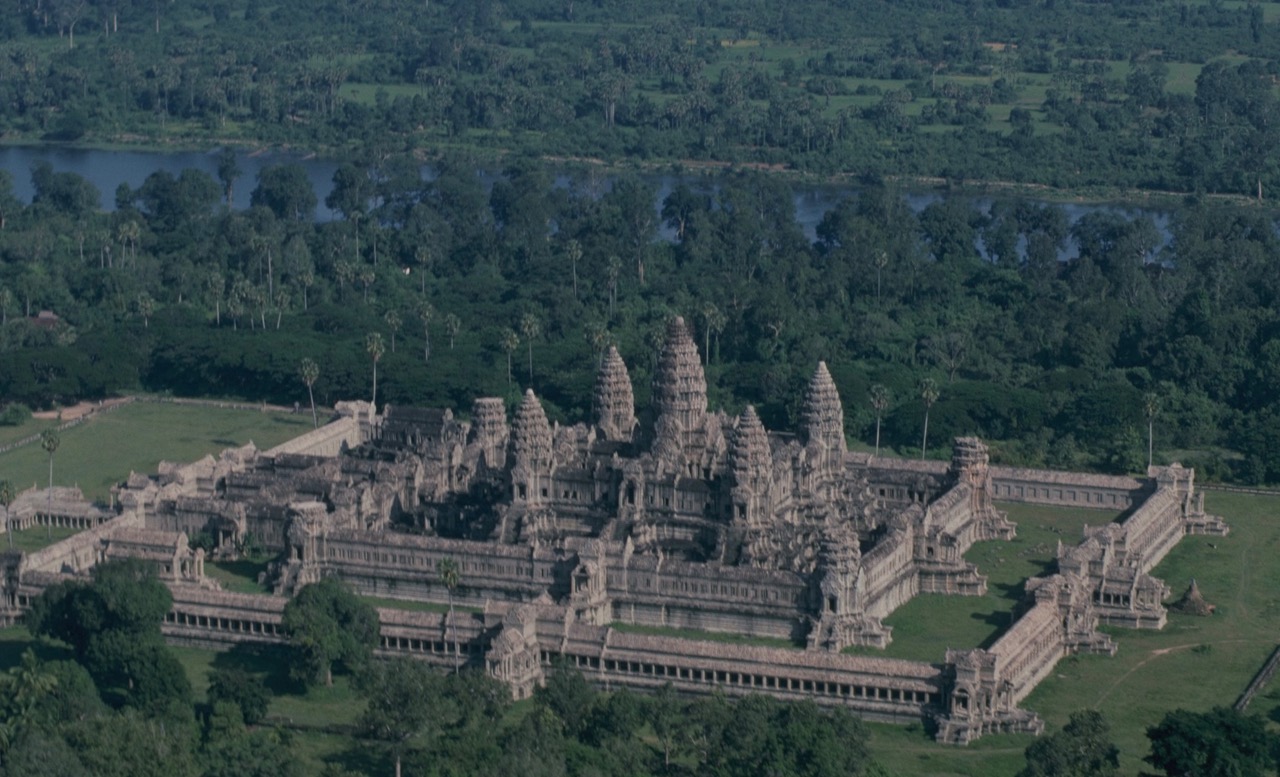
There are places in the world where history survives in fragments—a ruined wall, a weathered column, the foundation of a palace long vanished. And then there is Angkor. Rising from the forests and plains of northwestern Cambodia, Angkor is not simply a collection of ancient temples. It is the surviving heart of one of the greatest civilizations Southeast Asia has ever known: an immense landscape of sacred architecture, royal cities, reservoirs, canals, roads, bridges, monasteries and settlements created over centuries by the Khmer Empire.
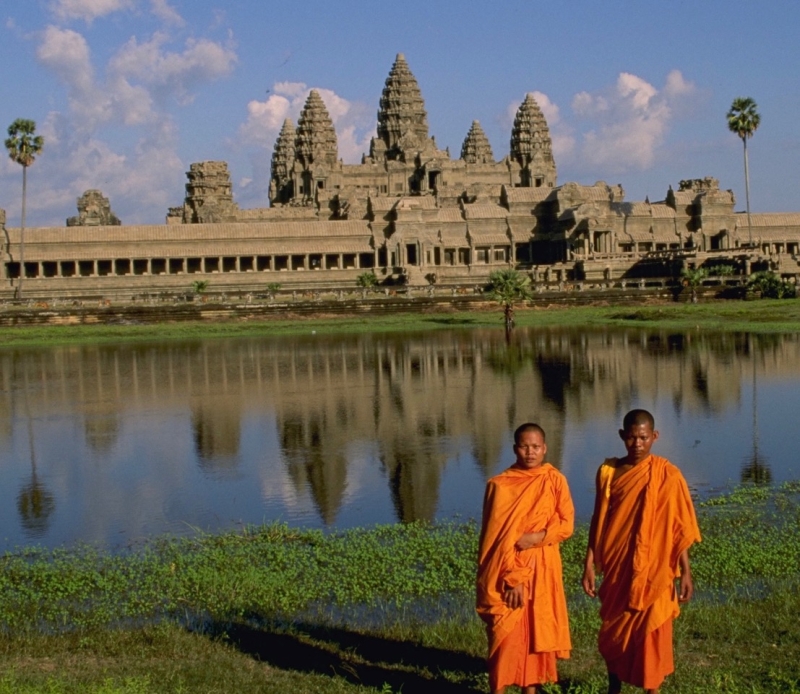
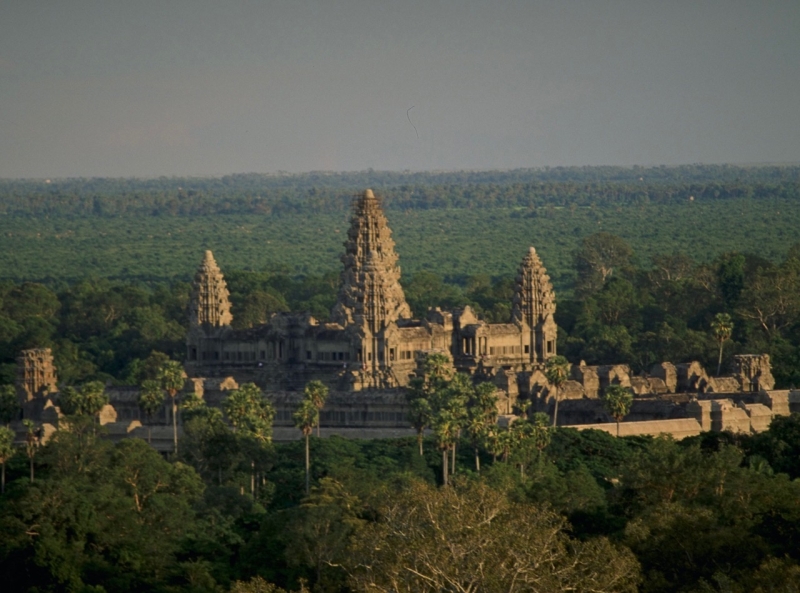
At its center stands Angkor Wat, its unmistakable five towers appearing above the Cambodian jungle like the silhouette of a mythical city. It has become so inseparable from Cambodian identity that it occupies the center of the nation's flag.
Yet Angkor Wat is only the beginning. Beyond its famous moat lie the monumental gates of Angkor Thom, the mysterious stone faces of the Bayon, the tree-entangled corridors of Ta Prohm, the exquisite carvings of Banteay Srei, the enormous monastic complex of Preah Khan and scores of lesser-known temples disappearing into the forest.
The UNESCO World Heritage property encompasses approximately 400 square kilometers, but archaeological research has demonstrated that the wider urban civilization associated with Angkor extended much farther. It was a metropolis whose true dimensions remained largely invisible for centuries because so much of the ordinary city was constructed from perishable materials rather than stone.
What remains today is therefore something extraordinary but deceptive. We see the skeleton of Angkor's sacred and royal world. Much of the living city—the wooden houses, markets, workshops and neighborhoods in which generations of Khmer people lived—is gone.
To understand Angkor is to imagine the civilization that once surrounded the stones.
BEFORE ANGKOR
The Khmer Empire did not suddenly emerge from the Cambodian jungle. For centuries before Angkor reached its zenith, mainland Southeast Asia contained competing kingdoms, trading centers and cultural networks connecting China, India and the islands of Southeast Asia.
Indian religious and philosophical ideas had traveled eastward through trade and diplomacy rather than through any simple wholesale colonization. Sanskrit became an important language of royal and religious culture. Hindu concepts of kingship, cosmology and temple architecture were absorbed and transformed by local societies.
Buddhism arrived as well. Cambodia's pre-Angkorian civilizations developed their own distinctive synthesis of indigenous beliefs and imported Hindu and Buddhist traditions. Earlier centers such as Sambor Prei Kuk reveal architectural and religious traditions that would eventually flower on a vastly greater scale at Angkor. By the beginning of the ninth century, the foundations were in place for a new Khmer imperial state.
Traditionally, the beginning of the Angkorian period is associated with Jayavarman II, whose reign helped establish a more unified Khmer kingdom. In 802, according to a later inscription, a ceremony associated with his kingship took place on Phnom Kulen, the sacred mountain northeast of Angkor. The precise meaning of the ceremony continues to be debated, but Jayavarman II came to be regarded as a pivotal founder of the Angkorian monarchy.
What followed was an extraordinary succession of rulers who constructed temples not merely as places of worship but as declarations of cosmic and political order. The landscape itself became part of the architecture. Mountains represented the dwelling places of the gods. Reservoirs evoked the cosmic oceans. Temples rose in ascending terraces toward central sanctuaries. Roads and ceremonial avenues established carefully controlled approaches to sacred space. Angkor was simultaneously a capital, an agricultural landscape, an engineering system and a representation of the universe.
Angkor Wat and the Hindu World
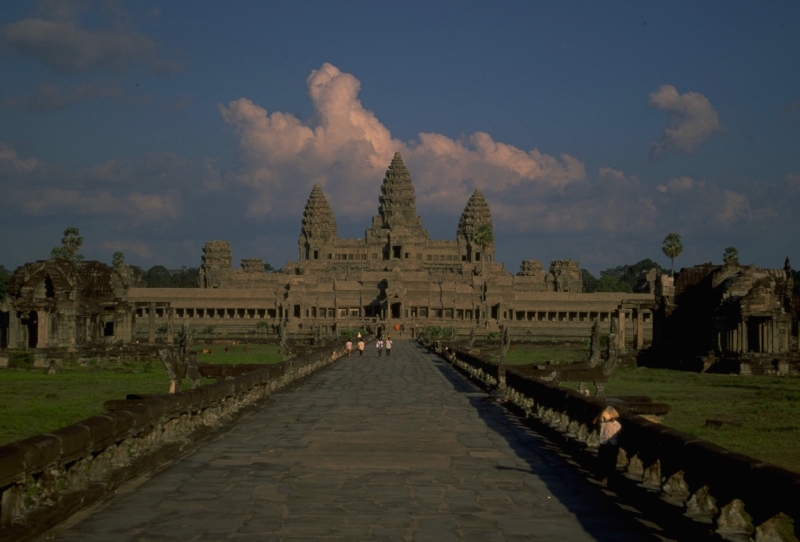
The greatest single expression of this Hindu vision was Angkor Wat. Constructed during the reign of King Suryavarman II in the first half of the 12th century, Angkor Wat was originally dedicated principally to Vishnu, one of the major deities of Hinduism. Even today, its scale is difficult to comprehend until one approaches it on foot.
A vast moat surrounds the temple enclosure. A long causeway leads toward an architectural mountain of galleries and towers. The central sanctuary rises dramatically above the surrounding plain, its towers shaped like lotus buds. The arrangement was not accidental.
Angkor Wat was a representation in stone of Hindu cosmology. Its central towers symbolically evoke Mount Meru, the sacred mountain at the center of the universe. The surrounding galleries, enclosures and waters reinforce a progression from the earthly world toward the divine. Yet the monument's greatness lies as much in its details as in its enormous dimensions. Kilometers of bas-reliefs unfold across its galleries. Gods, warriors, kings, celestial dancers and armies march across the stone. Episodes from Hindu epics and mythology become vast visual narratives.
Among the most celebrated is the Churning of the Ocean of Milk, one of Hinduism's great creation narratives. Gods and demons pull opposite ends of the serpent Vasuki, using it like a rope to churn the cosmic ocean in pursuit of the elixir of immortality. Elsewhere are battle scenes from the Ramayana and Mahabharata, processions and images associated with Suryavarman II himself. These carvings were not simply decoration. To the people who created them, mythology, kingship and cosmic order were interconnected. The temple proclaimed both devotion to the divine and the legitimacy of earthly power. Angkor Wat was architecture as theology—and theology as statecraft.
The Khmer and the Cham
No history of Angkor is complete without understanding its relationship with Champa.The Cham civilization flourished primarily along the coast of what is now central and southern Vietnam. Like the Khmer, Cham rulers absorbed and transformed Indian religious influences. Hinduism—particularly devotion to Shiva—played an important role in Cham royal culture, although Buddhism also flourished at different periods.
The surviving brick sanctuary towers at places such as Mỹ Sơn in Vietnam testify to a sophisticated civilization with its own architecture, sculpture, language and maritime traditions. Champa and the Khmer Empire were sometimes allies, sometimes trading partners and frequently enemies. Their fortunes rose and fell over centuries.
One of the most dramatic moments in Angkor's history came in 1177, when Cham forces launched an attack against the Khmer capital. Accounts and later artistic depictions indicate that the invaders traveled through the waterways of the region, including the great Tonlé Sap system. Angkor was sacked. It must have been a catastrophe. The political and spiritual center of a civilization that had built monuments intended to proclaim permanence had been penetrated by an enemy. But the Cham victory did not mark the end of Angkor. Instead, it helped set the stage for one of the most remarkable reigns in Khmer history.
Jayavarman VII
From the turmoil emerged Jayavarman VII. He defeated the Cham and eventually ascended the Khmer throne. Under his rule, beginning in the late 12th century, the empire embarked upon an extraordinary program of construction. Jayavarman VII changed not merely the architecture of Angkor but its religious emphasis. Earlier Khmer royal monuments had been overwhelmingly associated with Hindu traditions. Jayavarman VII was a devoted adherent of Mahayana Buddhism. His Angkor therefore became increasingly Buddhist.
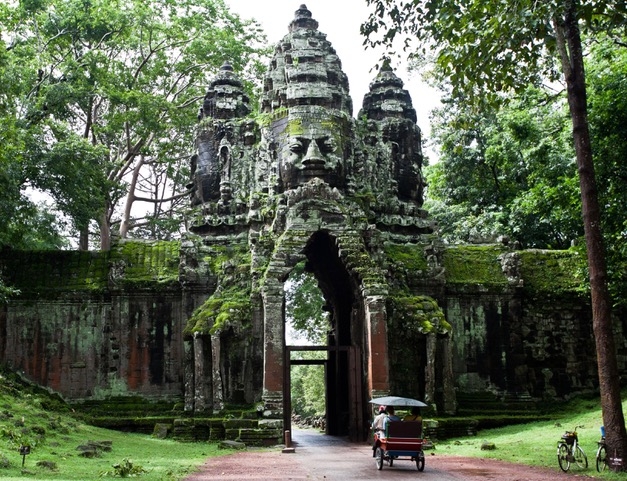
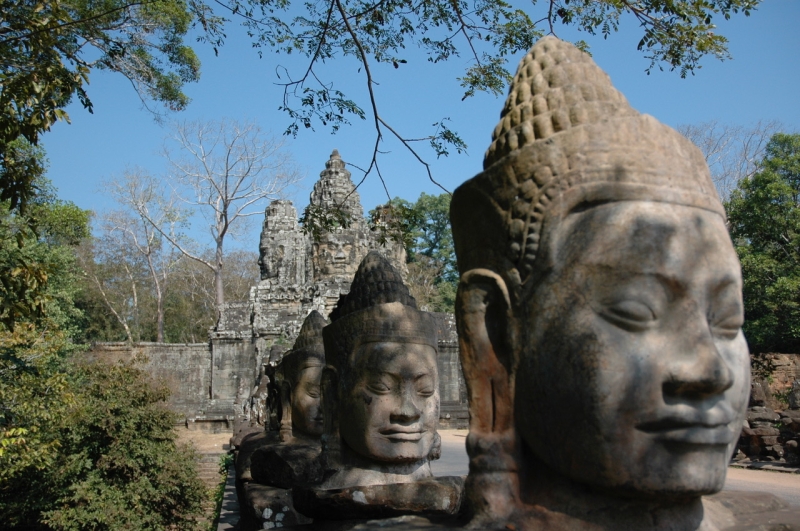
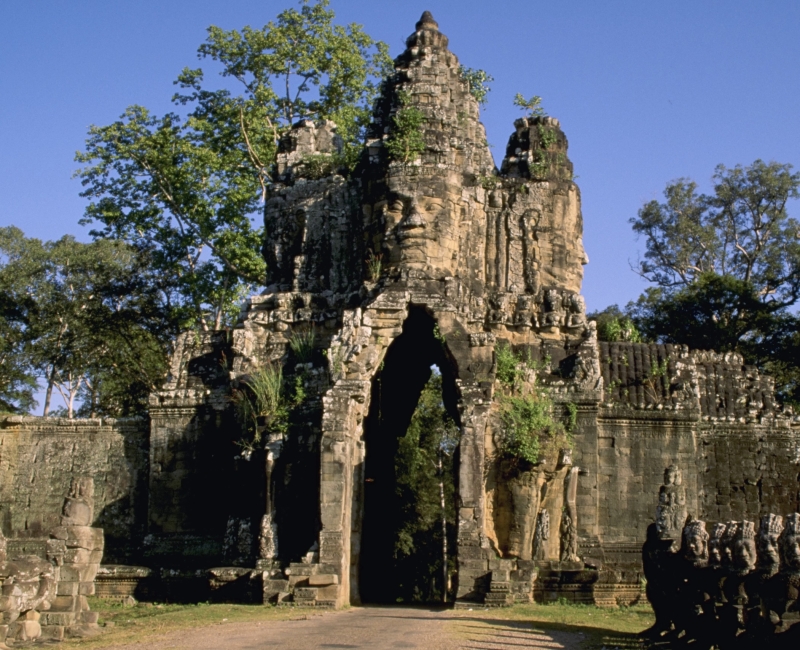
He created the immense walled city of Angkor Thom, whose name means "Great City." At its center he built the Bayon, one of the strangest and most compelling monuments anywhere in Asia. From its towers emerge enormous serene faces. They gaze outward in every direction—calm, enigmatic and seemingly omnipresent.
Scholars have long debated precisely whom these faces represent. They have been associated with the compassionate Buddhist bodhisattva Avalokiteshvara and with the image or authority of Jayavarman VII himself. Their power comes partly from that ambiguity.
Walk through the Bayon early in the morning and the faces appear, disappear and reappear as one passes between towers. Sunlight moves across their expressions. From one angle they seem benevolent; from another, almost supernatural. The Bayon's bas-reliefs are equally remarkable because they do something that Angkor Wat's great mythological galleries do less frequently: they bring us into the everyday world. There are soldiers and battles, but also markets, cooking, fishing, domestic scenes and ordinary people. Suddenly ancient Angkor becomes human.
Jayavarman VII's building program extended far beyond the Bayon. He constructed or transformed temples and monasteries, built roads and bridges and established facilities traditionally interpreted as rest houses and hospitals throughout his realm.
Among his greatest creations were Ta Prohm and Preah Khan. His reign represented the high point of Angkorian monumental ambition. But it also marked a transformation. The Khmer sacred landscape was no longer exclusively dominated by Hindu royal theology. Buddhism had become a powerful force at the very center of imperial life.
From Hinduism to Buddhism
It would be misleading to imagine that one morning Hindu Angkor simply became Buddhist. Religious change was much more complicated. Hinduism and Buddhism had coexisted in Southeast Asia for centuries. Individual rulers favored particular traditions, temples could be rededicated, and images could be altered as political and religious priorities changed.
After Jayavarman VII, there was a Hindu reaction during which some Buddhist imagery was damaged or modified. Eventually, however, Theravada Buddhism became increasingly influential in Cambodia. By the later Angkorian centuries, it was becoming deeply rooted in Khmer society.
Its religious structure differed significantly from the monumental royal cults of earlier centuries. The change was profound enough that temples originally conceived within Hindu cosmology could acquire new Buddhist identities. Angkor Wat itself survived this transformation. Rather than being abandoned when its original Hindu royal purpose diminished, it became an important Buddhist sanctuary. Buddhist monks and worshippers continued to use it through later centuries.
This is one reason the popular image of Angkor as a completely "lost city" swallowed by the jungle is misleading. Angkor's political importance declined, but the place was never entirely forgotten. Cambodians knew it was there. Monks prayed there. Pilgrims visited. The forest reclaimed many structures, but Angkor remained part of Cambodia's cultural memory.
A city larger than its temples
Perhaps the greatest modern revelation about Angkor is that the temples tell only part of its story. For generations, explorers and archaeologists concentrated understandably on its stone monuments. Modern archaeology—particularly aerial mapping, remote sensing and LiDAR technology—has radically expanded our understanding of what surrounded them. Beneath vegetation and modern landscapes, researchers have identified traces of roads, embankments, occupation mounds, canals, ponds and urban grids.
Angkor was not simply a group of isolated temples scattered through jungle. It was an enormous low-density urban complex. Its inhabitants lived across a landscape engineered on an extraordinary scale. Water was central to everything. The Angkorian plain experiences dramatic seasonal changes between monsoon rains and dry months. Khmer engineers responded by constructing vast reservoirs known as barays, together with canals, channels, embankments and ponds. The West Baray alone is approximately eight kilometers long.
These systems served practical purposes connected to water management, although scholars continue to debate exactly how particular components functioned at different times. Water also carried enormous religious significance. Engineering and cosmology were intertwined. Seen from above, Angkor begins to resemble not a ruined temple complex but the remains of a vast human ecosystem. The temples were its stone peaks. Around them stretched the city.
The great mystery: Why did Angkor decline?
For generations, historians searched for a single explanation for Angkor's decline. There probably wasn't one. The empire faced changing political, economic, religious and environmental circumstances. Regional power shifted. Maritime trade became increasingly important. Theravada Buddhism altered older patterns of royal religious patronage. Rival kingdoms grew stronger.
The Thai kingdom centered on Ayutthaya became a formidable adversary. Angkor suffered military pressure, and Ayutthayan forces captured the city in the 15th century. But warfare alone cannot explain everything. Research into Angkor's climate and water infrastructure has added another dimension. The very hydraulic network that helped make Angkor powerful may eventually have become a vulnerability.
Periods of severe drought appear to have alternated with intense monsoon rains. A sprawling and highly modified water-management system had to cope with dramatic extremes. Channels could become clogged or damaged. Erosion and sediment could disrupt infrastructure. A system designed over generations became increasingly difficult to maintain. Angkor therefore offers an unexpectedly modern lesson.
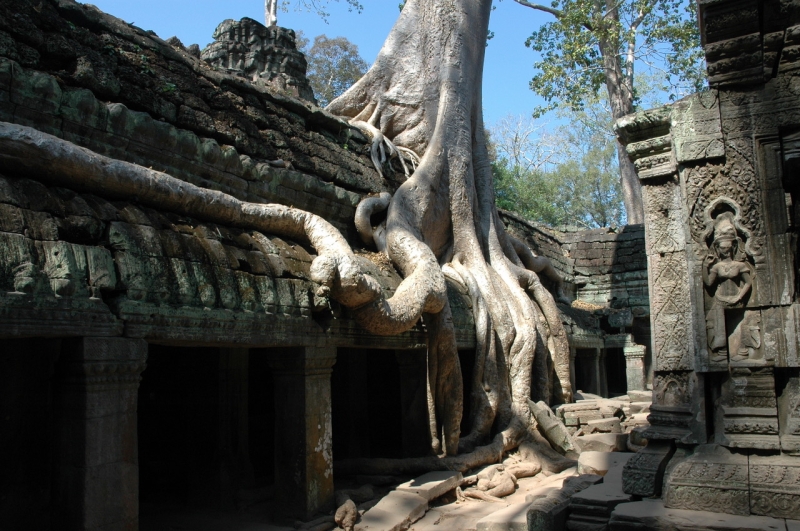
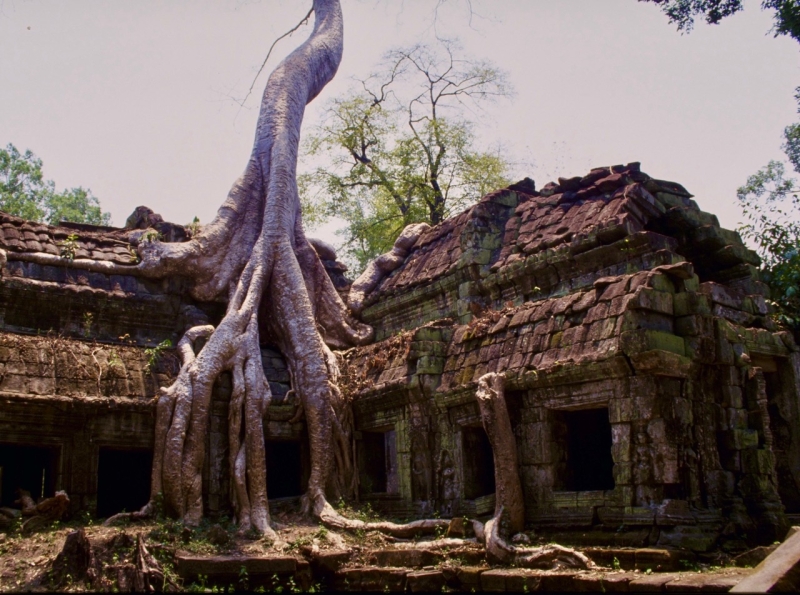
Civilizations can be extraordinarily sophisticated and still be vulnerable when their infrastructure, environment and political systems are subjected to stresses beyond what they were designed to withstand. Angkor did not disappear overnight. Its political center shifted southward. Population patterns changed. Buildings deteriorated. The forest slowly entered abandoned spaces. Roots pushed between stones. Trees rose through courtyards. A civilization that had altered an entire landscape gradually became an archaeological landscape itself.
Angkor and the outside world
European visitors encountered Angkor long before the great archaeological projects of the modern era, but 19th-century accounts helped ignite international fascination with the ruins. French colonial rule brought systematic study and conservation. Beginning in the early 20th century, the École Française d'Extrême-Orient undertook extensive archaeological research and restoration. Vegetation was cleared from monuments, fallen structures were documented and enormous quantities of stone were painstakingly reconstructed. This work saved important monuments, although modern archaeology also views early restoration through the changing standards and assumptions of its time.
Then Cambodia entered one of the darkest periods in modern Asian history. War, political instability and the rise of the Khmer Rouge devastated the country. Between 1975 and 1979, the Khmer Rouge regime presided over mass executions, starvation, forced labor and persecution that killed an enormous portion of Cambodia's population. The human catastrophe cannot be compared simply with damage to monuments. Cambodia lost people, families, scholars, professionals, artists and traditions. Years of warfare and instability also made archaeological conservation exceedingly difficult. Mines and unexploded ordnance scarred parts of the country. Archaeological sites were vulnerable. Looters removed sculptures and architectural fragments, feeding an international antiquities market hungry for Khmer masterpieces. Some objects disappeared into private collections and museums thousands of miles from Cambodia.
The loss was not merely artistic. When a sculpture is torn from a temple without archaeological documentation, part of its history disappears with it. In recent decades, Cambodia has increasingly pursued the return of Khmer antiquities believed to have been illegally removed from the country. Each returned object carries with it a larger question: who owns the physical memory of a civilization?
Angkor’s second invasion: Tourism
In 1992, Angkor was inscribed on UNESCO's World Heritage List. International cooperation transformed conservation of the site, and Angkor eventually became one of Asia's most famous tourist destinations. Tourism brought enormous benefits. It created employment, stimulated hotels and restaurants, supported transportation businesses, encouraged infrastructure development and introduced millions of people to Cambodian history.
Siem Reap changed dramatically. What had been a comparatively quiet provincial town became an international tourism center filled with hotels, resorts, restaurants, galleries, markets and nightlife. But Angkor's success created another problem. Too many people wanted to experience the same monuments at the same time. Thousands converging on Angkor Wat for sunrise may produce extraordinary photographs, but crowds place physical pressure on ancient structures. Stone steps wear. Paths deteriorate. Traffic increases. Waste must be managed.
Water presents an even more serious concern. Hotels, swimming pools, restaurants and a growing urban population require enormous quantities of water. Heavy extraction of groundwater has raised concerns about the stability of the soils supporting ancient monuments.
The paradox is unmistakable. Tourism helps provide the money and international attention necessary to preserve Angkor. Tourism can also help destroy what visitors have traveled across the world to see. There is another danger: turning a sacred and living cultural landscape into a theme park. Angkor is not an abandoned movie set. Buddhist monks still worship within its temples. Cambodian families live within the greater protected landscape. Ceremonies continue. The monuments remain part of the spiritual and cultural identity of Cambodia. The challenge is therefore greater than controlling ticket sales. It is preserving a living place.
The true highlights of Angkor
For the first-time visitor, Angkor Wat deserves its reputation. It should not be rushed. The great mistake is to photograph its reflection at sunrise and believe one has "seen" it. Walk the galleries. Study the bas-reliefs. Look upward as the architecture rises toward the central sanctuary. Step away from the main procession of visitors and consider what it meant to create this monument nine centuries ago.
Then go to Angkor Thom. Approach through one of its monumental gates, where the road crosses a causeway lined with figures associated with the Churning of the Ocean of Milk. At the center is the Bayon. If Angkor Wat is grand and harmonious, the Bayon is mysterious and psychological. Its giant faces are among the unforgettable images of Southeast Asia.
Nearby, the Terrace of the Elephants evokes the ceremonial world of the Khmer court, while the Terrace of the Leper King contains remarkable sculptural work.
Then there is Ta Prohm.
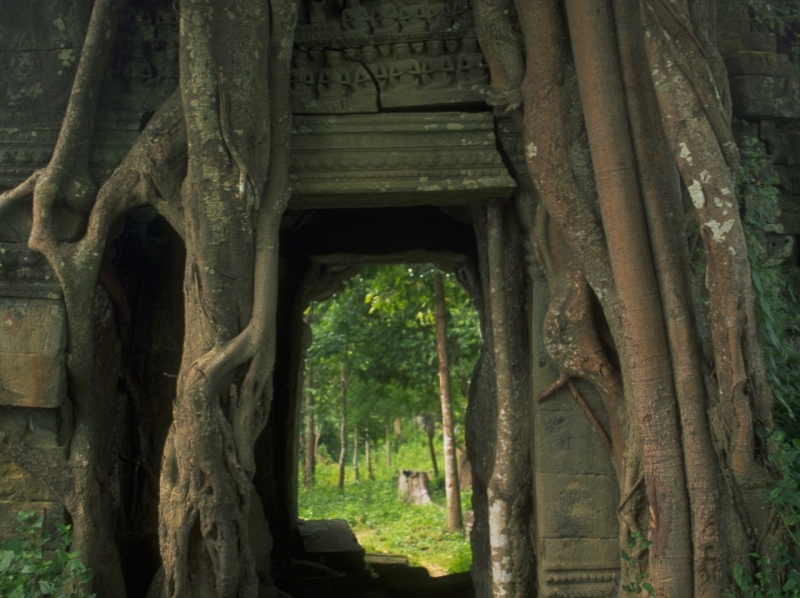
Its fame comes partly from the immense trees whose roots pour over walls and galleries. Unlike temples reconstructed into comparatively orderly architectural monuments, Ta Prohm preserves something of the romantic encounter between architecture and jungle. But its beauty carries an irony. The trees that make Ta Prohm so visually extraordinary can also threaten its masonry. Nature is simultaneously creating the atmosphere and dismantling the building.
Preah Khan deserves more time than many visitors give it. Built under Jayavarman VII, it is vast, atmospheric and complicated—a maze of galleries, courtyards, carvings and partially ruined structures.
For artistic refinement, however, it is difficult to surpass Banteay Srei. Located farther from the principal Angkor monuments, it is smaller but astonishingly intricate. Its reddish sandstone carvings possess a delicacy that can seem almost impossible in stone. Pediments and lintels are covered with elaborate Hindu imagery executed with extraordinary precision.
Then there is Banteay Samré, quieter and less overwhelmed by visitors; Pre Rup, whose warm stone can be beautiful in late afternoon; and Neak Pean, the unusual island sanctuary approached across water. Beyond the standard circuits lies an even larger world. The sacred Phnom Kulen landscape connects visitors with the beginnings of Angkorian kingship. More distant Khmer sites reveal just how far imperial influence and infrastructure extended. The greatest Angkor experience is therefore not one temple. It is gradually realizing that every temple belongs to something much larger.
What most visitors miss!
Perhaps the most overlooked attraction at Angkor is the landscape itself. Stand beside one of the enormous reservoirs and imagine the labor required to reshape the terrain without modern machinery. Look at an ancient bridge and think about the roads that once carried officials, soldiers, traders and pilgrims across the empire. Notice the surviving ponds.
Look beyond a temple wall and imagine wooden houses stretching into neighborhoods that archaeology can detect but the eye can no longer see. Angkor's greatest achievement may not have been Angkor Wat. It may have been the integration of architecture, water, agriculture, religion and political authority across an immense inhabited landscape. The spectacular temples survive because they were built of stone. The civilization was far greater than its stone buildings.
A civilization scarred by war and time
Angkor has endured an extraordinary series of upheavals.
• It survived wars between the Khmer and Cham.
• It survived the decline of the empire that created it.
• It endured shifting capitals, changing religions and centuries of tropical vegetation.
• It endured colonial occupation and competing interpretations by outsiders.
• It survived Cambodia's modern wars.
• It survived the Khmer Rouge era and the instability that followed.
• It suffered looting, illicit excavation and the removal of cultural treasures.
It now confronts mass tourism, urban development, climate pressures, groundwater concerns and the enormously complicated responsibility of conserving hundreds of ancient structures in a tropical environment. And yet it remains. Perhaps that endurance is the most remarkable part of Angkor's story.
The faces in the stone
Late in the day, after the tour groups begin returning to Siem Reap, Angkor changes. The heat softens. Stone that appeared gray at noon takes on warmer shades. Shadows lengthen across galleries and courtyards. Monks in saffron robes pass through buildings created for kings who died eight centuries ago.
At the Bayon, the great faces remain above the ruins. They watched the empire at its height. They witnessed invasion. They remained as Hinduism and Buddhism rose and receded around them. They watched royal power move elsewhere and forests creep into abandoned courtyards. They survived foreign explorers, archaeologists, civil war, looters and millions of modern visitors. And still they look outward. That may ultimately be why Angkor affects people so deeply.
It is spectacular, certainly. Angkor Wat deserves its place among the world's architectural masterpieces. But Angkor is more compelling for what it reveals about the impermanence of power. The Khmer kings built on a scale intended to communicate eternity. Their empire nevertheless changed, fractured and disappeared as an imperial state. The temples remained.
Today they belong not to forgotten kings but to Cambodia and to a living Khmer culture that survived catastrophes far more recent than the fall of Angkor. The stones have become witnesses.
They tell of a civilization that mastered water, moved mountains of earth and stone, created some of humanity's most beautiful sculpture, fought devastating wars, embraced different religions and constructed one of the most extraordinary urban landscapes of the preindustrial world. To walk through Angkor is therefore not simply to visit ruins. It is to walk through the remains of an idea: that human beings could build an earthly reflection of the universe itself. Nearly a thousand years later, much of that universe is broken. And yet, against the Cambodian sky, the towers of Angkor Wat still rise.
Since 1989, First Cabin Travel has offered luxury-styled itineraries to unique and varied destinations with the mainstay of bookings derived from repeat clientele and their enthusiastic referrals - First Cabin has come to be known as Your Passport to Excellence
CA Reg: 2016168-40


