






Bali, Indonesia
A tapestry of islands, faiths, histories and hidden wonders
11/14/2025
Indonesia’s story stretches back over 1.5 million years, with the discovery of Homo erectus—commonly called Java Man—marking one of the earliest hominid settlements outside Africa. Over millennia, the Indonesian archipelago evolved into a crossroads of migration and trade, absorbing influences from Austronesian voyagers, Indian traders, Arab merchants, Chinese explorers, and later, European colonizers.
From the 4th to the 15th centuries, powerful kingdoms flourished:
-
Srivijaya (7th–13th century), based in Sumatra, controlled maritime trade across the Malacca Strait.
-
Majapahit (13th–16th century), centered in Java, is considered Indonesia’s golden age, unifying much of the archipelago and influencing culture, literature, and governance.
Magnificent monuments such as Borobudur (Buddhist) and Prambanan (Hindu) remain enduring testaments to this era.
By the 13th century, Islam began spreading peacefully through traders and scholars. Islamic sultanates emerged across Java, Sumatra, and Borneo, reshaping political authority while blending local traditions with Islamic law and culture.
Drawn by the lucrative spice trade, the Portuguese arrived in the early 1500s, followed by the Dutch, who ultimately prevailed. The Dutch East India Company (VOC) established a powerful monopoly until its collapse in 1799. Thereafter, the Dutch colonial government directly ruled the
“Dutch East Indies.”
Colonial policies reshaped agriculture, religion, and infrastructure, though not without resistance—Indonesia’s many ethnic groups and kingdoms repeatedly rebelled.
During World War II, Japanese occupation weakened Dutch authority and strengthened Indonesian nationalism. On August 17, 1945, Sukarno and Mohammad Hatta proclaimed Indonesian independence.
A four-year diplomatic and military struggle ensued until the Dutch formally recognized sovereignty in December 1949. Indonesia embarked on the ambitious task of unifying thousands of islands under one identity: Bhinneka Tunggal Ika—“Unity in Diversity.”
Indonesia’s first president, Sukarno, championed nationalism and non-alignment during the Cold War. Faced with regional rebellions, inflation, and political instability, his policies veered toward authoritarianism.
General Suharto deposed Sukarno and ruled for 31 years. His regime emphasized:
-
Economic development
-
Political order
-
Military influence
-
Strong ties with Western nations
Although the economy grew dramatically, the era was also marked by suppression of dissent and corruption. The Asian Financial Crisis of 1997–98 toppled the regime.
Since 1998, Indonesia transformed into one of Asia’s most vibrant democracies. Key features include:
-
Direct presidential elections (since 2004)
-
A multi-party parliamentary system
-
Regional autonomy for provinces
-
Peace agreements ending long-running conflicts (e.g., Aceh)
Today, Indonesia is a dynamic emerging economy and a major geopolitical player within ASEAN and the Indo-Pacific region.
Indonesia is often referred to as the world’s most populous Muslim-majority country—but the reality is far more diverse. The constitution protects freedom of religion and recognizes six official religions:
-
Islam (≈87%) – Predominantly Sunni; deeply integrated into daily life
-
Christianity (Protestant ≈7%, Catholic ≈3%)
-
Hinduism (≈1.7%) – Most concentrated in Bali
-
Buddhism (≈0.8%) – Practiced largely by ethnic Chinese and Javanese
-
Confucianism – Acknowledged as an official faith since 2006
Indonesia’s religious harmony is not accidental—it is upheld by a state philosophy known as Pancasila, which emphasizes belief in one God, social justice, unity, democracy, and humanitarianism.
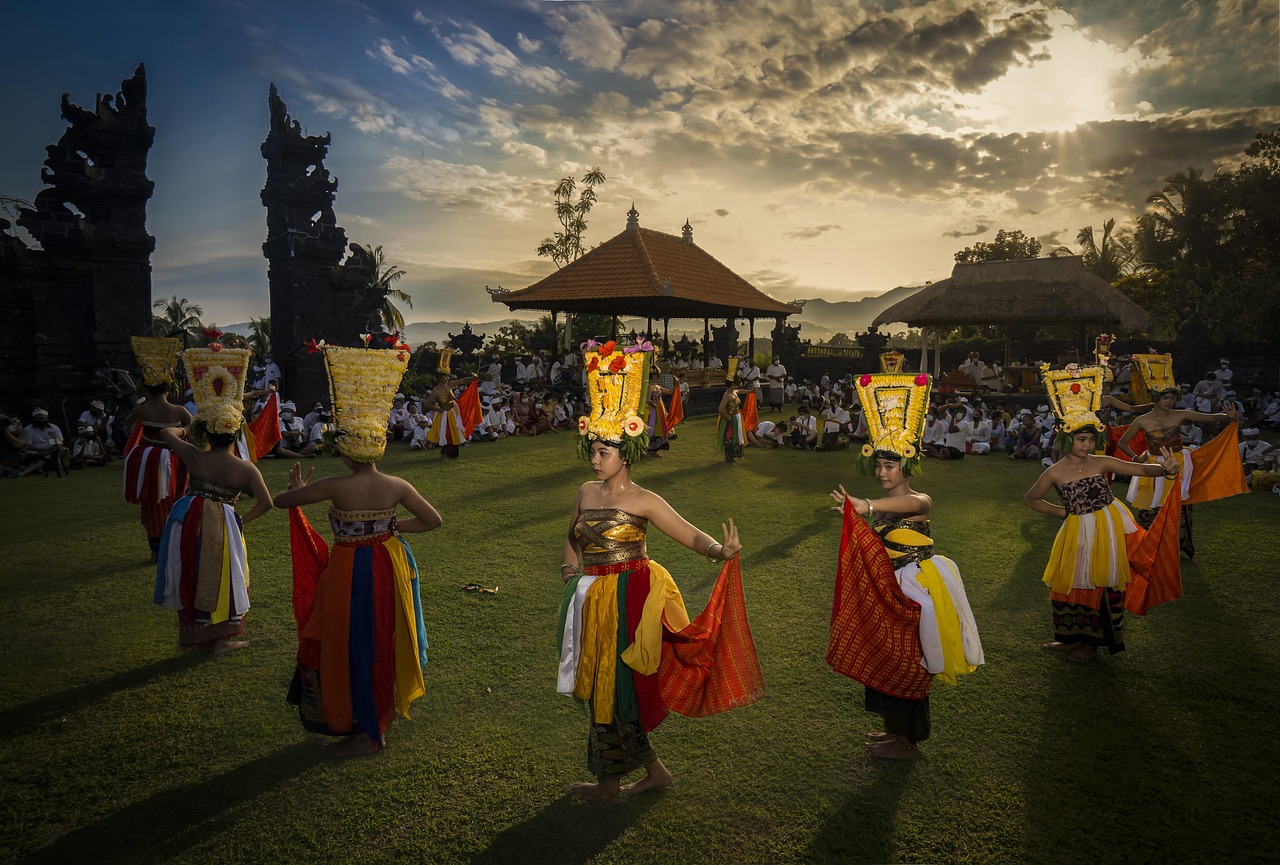
Bali stands as a cultural jewel unlike any other part of Indonesia.
Dominated by Balinese Hinduism, its identity is shaped by ritual, art, and harmony with nature. Daily offerings (canang sari) adorn temples, homes, shops, and even roadsides. Music, dance, festivals, and craftsmanship permeate everyday life.
Located on Bali’s southern tip, Nusa Dua was purpose-built as an international tourism and conference center but maintains a serene, luxurious ambiance. It is known for:
-
World-class resorts and spas
-
Pristine, calm beaches
-
Fine dining and cultural theaters
-
The Bali Nusa Dua Convention Center
-
The famous Water Blow, where waves crash dramatically against the limestone cliffs
Nusa Dua feels worlds apart from the bustle of Kuta or Seminyak—making it ideal for relaxation, family travel, or corporate retreats.
Indonesian craftsmanship is one of the richest on Earth. The country’s artisans preserve traditions passed down through generations.
A UNESCO-recognized art form, batik consists of wax-resist dyeing to create intricate motifs symbolizing prosperity, harmony, or protection.
Ikebana & Ikat Weaving (Bali, Flores, Sumba)These textiles use hand-dyed threads to produce geometric or mythical patterns—some taking months to complete.
Wood Carving (Ubud & Mas Villages)Balinese woodcarvers are world-renowned, sculpting everything from deities to masks and modern designs.
Silverwork (Celuk Village, Bali)Celuk artisans specialize in sterling silver jewelry crafted with remarkable precision.
Stone Carving (Batubulan)Temple guardians, statues of gods, and mythical creatures are chiseled by hand from volcanic stone.
Beyond Bali’s famous beaches and temples lies a treasure trove of more intimate, less-traveled marvels.
1. Sidemen Valley (East Bali)A peaceful, terraced landscape of rice paddies and small villages—ideal for trekking and traditional weaving.
2. Tirta Gangga Water PalaceBuilt by the royal family of Karangasem, its pools and fountains create a serene, photogenic escape.
3. Munduk HighlandsMist-covered mountains, hydrangea fields, coffee plantations, and waterfalls.
4. Nusa Penida & Nusa LembonganJust across from Nusa Dua—home to dramatic cliffs, manta rays, and the pristine Kelingking Beach.
5. Uluwatu Temple at SunsetPerched above the Indian Ocean, this temple offers both spiritual presence and unforgettable views.
6. The Village of PenglipuranA traditional Balinese community renowned for its immaculate bamboo homes and preserved culture.
7. Amed’s Black Sand BeachesGreat for snorkeling, diving, and witnessing a quieter side of Bali.
Indonesia is the largest archipelagic nation in the world, with the official count shifting slightly across surveys as tides and classifications vary.
**Current figure (as of the latest government validation):17,508 islands
Of these:
-
About 6,000 are inhabited
-
The rest range from tiny sandbars to large islands with valleys, volcanoes, and forests
Major islands include Java, Sumatra, Borneo (shared with Brunei and Malaysia), Sulawesi, Papua, and Bali.
Indonesia is a nation defined by contrasts and harmonies—ancient traditions and modern dynamism, bustling cities and untouched islands, deep spirituality and vibrant creativity. Bali and Nusa Dua epitomize this harmony, offering moments of peace, adventure, craftsmanship, and cultural richness.
With over 17,000 islands, hundreds of ethnic groups, and vast historical layers, Indonesia remains one of the world’s most fascinating places to explore—whether through history, art, religion, or a sunset on a quiet Balinese beach.