






CBD creams and lotions for arthritic relief
what relief they might realistically offer
9/10/2026
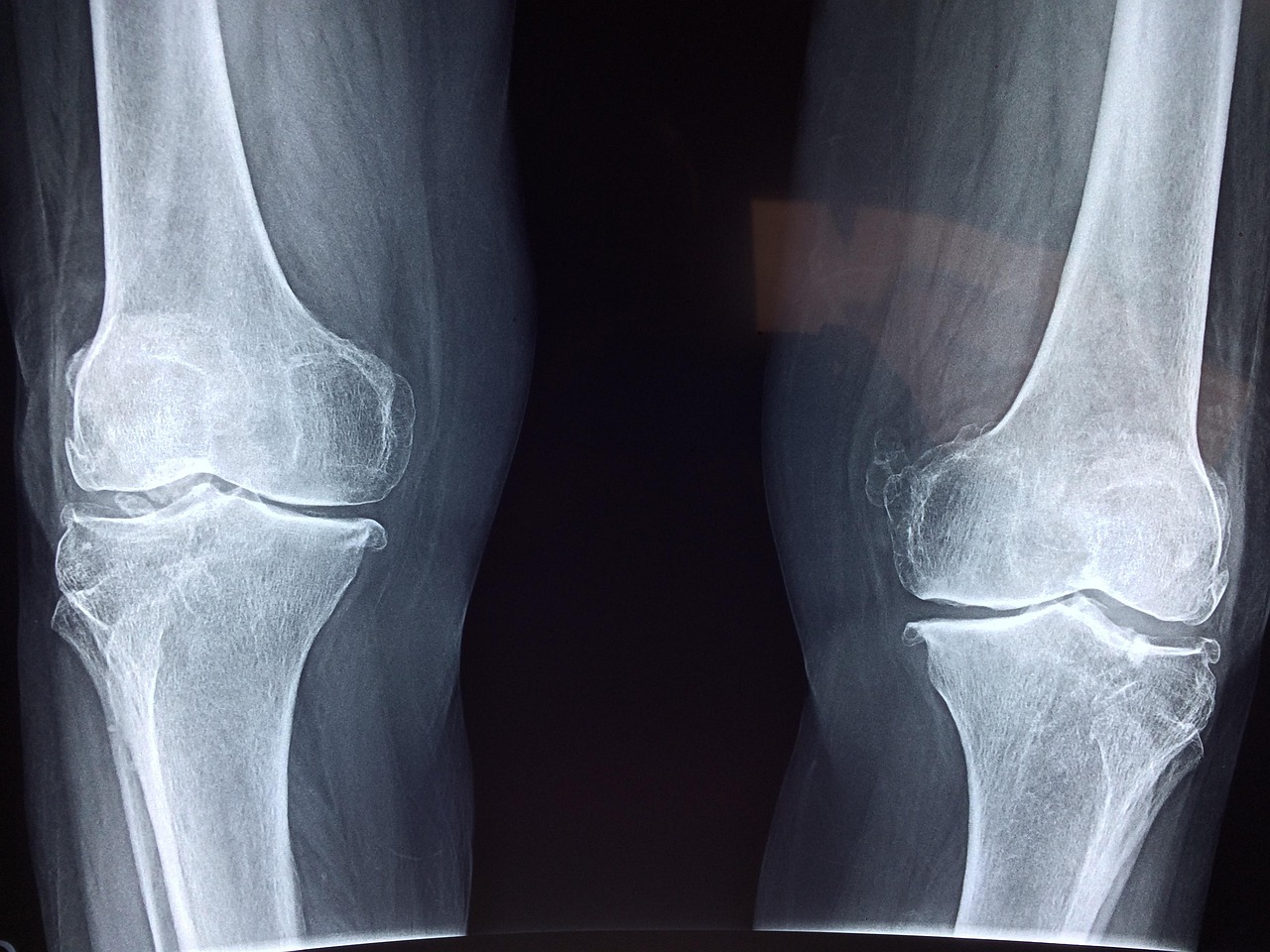
For someone living with severe knee arthritis, the appeal of a cream is easy to understand. Walking hurts. Stairs become a calculation. Sleep may be interrupted by aching, and ordinary errands require planning. A product that can be rubbed directly onto the painful area seems like a welcome possibility—especially when the alternatives involve more pills, injections, or surgery.
CBD creams and lotions have entered that space with considerable publicity. They are often described as soothing, anti-inflammatory, natural, and useful for joint pain. But those descriptions leave the most important question unanswered:
Can a CBD cream meaningfully help a knee whose cartilage has worn away?
The most accurate answer is that some people may experience relief, but reliable evidence for ordinary CBD creams in severe knee osteoarthritis remains insufficient. There is no established evidence that they rebuild cartilage, restore lost joint space, or reverse a “bone-on-bone” knee. Any possible role is in managing symptoms. Research on cannabis products more broadly should not be mistaken for proof that a particular CBD lotion works.
Understanding that distinction requires looking at both sides of the story: how CBD became a skin-care ingredient, and what actually causes pain in an arthritic knee.
Cannabidiol, usually shortened to CBD, is one of the chemical compounds found in the cannabis plant. It is different from tetrahydrocannabinol, or THC, the compound chiefly responsible for the characteristic cannabis high. CBD itself does not produce that same intoxication.
Although cannabis has a long history of medicinal use, modern CBD products grew out of twentieth-century chemistry. Researchers isolated CBD in 1940, and Raphael Mechoulam and Yuval Shvo clarified its chemical structure in 1963. Identifying the compound made it possible to study CBD separately from the many other substances in cannabis. Ancient use of a whole plant cannot tell us what an isolated ingredient will do in a modern lotion.
There is no single clearly documented inventor of the modern CBD cream. The products developed through a combination of cannabis research, extraction technology, cosmetic formulation, and commercial interest. Their ancestry includes herbal skin preparations, but today’s CBD lotions are manufactured mixtures whose composition may differ substantially from historical remedies.
In the United States, the 2018 Farm Bill was an important commercial turning point. It changed the federal treatment of qualifying hemp and helped expand the market for hemp-derived products. That expansion did not amount to FDA approval of CBD as an arthritis treatment. A product’s availability on a store shelf and its demonstrated medical effectiveness are separate matters. The FDA has approved a prescription CBD medicine for certain seizure disorders; it has not approved CBD creams for knee arthritis.
Another source of confusion is the word hemp. Hemp seed oil and CBD extract are not interchangeable. Hemp seed oil is principally an oil obtained from seeds and can function as a moisturizing ingredient. The seeds do not naturally contain CBD, although trace amounts can enter seed products through contact with other plant material during processing. A lotion advertising hemp seed oil therefore should not be assumed to contain a meaningful amount of cannabidiol. This distinction matters when reading research as well as labels. A study of hemp seed oil is not automatically a study of CBD. Likewise, a preparation containing THC, CBD, and other cannabinoids cannot establish that CBD alone produced a benefit.
The idea of delivering CBD through the skin has a scientific basis, but delivery is more complicated than adding an extract to moisturizer. CBD is poorly soluble in water. The surrounding ingredients—the cream, gel, oils, solvents, and other components—affect how much of it enters the skin and how much remains near the surface. Researchers studying CBD in laboratory samples of human skin have found that changing the formulation changes its delivery. This means two products with the same stated CBD concentration can behave differently. It also means that a higher number on the label does not necessarily translate into a stronger therapeutic effect.
The terms topical and transdermal deserve particular attention. A topical product is applied to the skin, usually with the intention of producing a local effect. A transdermal product is designed to deliver a substance through the skin, potentially into the circulation. Manufacturers sometimes use these terms loosely, but a moisturizing cream and an engineered drug-delivery gel should not be treated as equivalent. There is also a substantial distance between entering the skin and reaching a useful concentration in a knee joint. A 2024 study using human skin found that specially formulated CBD preparations could improve delivery into particular skin layers. It did not demonstrate that a retail lotion reaches the interior of an arthritic knee in an amount that relieves pain. That remains a clinical question, not something a skin-penetration experiment can settle.
What, then, does “bone on bone” mean?
Doctors and patients commonly use the phrase to describe advanced cartilage loss, often seen as marked narrowing or disappearance of joint space on an X-ray. Healthy articular cartilage provides a smooth surface over the ends of bones. With advanced osteoarthritis, that surface deteriorates, and the joint may develop bone spurs, stiffness, deformity, and painful movement. The damage may be concentrated in one part of the knee rather than being equally severe throughout it.
However, osteoarthritis involves more than a worn cushion. It can affect the joint lining, underlying bone, meniscus, ligaments, and other tissues. Pain can reduce activity, and reduced activity can lead to weakness that places additional demands on the joint. The National Institutes of Health describes osteoarthritis as a disease of the whole joint, rather than simply the inevitable result of mechanical wear.
This helps explain why symptom relief remains possible even when cartilage is badly damaged. A treatment does not have to regrow cartilage to reduce some of the pain associated with the joint. But the reverse is equally important: feeling better after using a cream does not show that the underlying damage has improved. CBD attracted interest partly because experiments suggested effects on inflammation and pain-related biological processes. In a frequently cited study published in 2016, researchers applied a CBD gel in a rat model of arthritis and observed reductions in swelling and pain-related behavior. Those findings provided a reason to investigate the approach further. They did not establish an effective dose for people or demonstrate treatment of longstanding human knee degeneration.
Animal studies are useful early steps. They allow researchers to investigate mechanisms under controlled conditions. Yet an experimentally inflamed rat joint is different from a human knee that has undergone years of structural change. An encouraging laboratory result can justify a clinical trial without justifying a treatment claim.
mong the more encouraging human studies is a small randomized trial published in 2022 involving arthritis at the base of the thumb. Eighteen participants used a CBD preparation in shea butter and a control preparation of shea butter alone during separate two-week treatment periods. The researchers reported improvements in pain and self-reported disability with CBD. They did not find corresponding differences in measures such as grip strength, pinch strength, and range of motion.
That result deserves attention, but its limits are substantial. Eighteen participants are too few to establish broad effectiveness or detect uncommon harms. Two weeks cannot demonstrate durable relief over months or years. Most importantly for someone with knee pain, the thumb is a different joint with different loading demands. The study offers a preliminary signal; it does not establish that CBD cream helps a bone-on-bone knee. A 2024 feasibility study also reported improvement after people with hand osteoarthritis used a transdermal CBD gel. However, it was open-label and lacked a placebo comparison. Participants knew what they were receiving, and the design could not reliably separate the treatment’s specific effect from expectations, symptom fluctuations, and other influences.
Evidence from oral CBD provides additional context, although swallowing CBD is not the same intervention as applying it to the skin. In a 2023 randomized knee-osteoarthritis trial, 86 participants were assigned to high-dose oral CBD or placebo while continuing paracetamol, known in the United States as acetaminophen. After eight weeks, CBD did not provide additional pain relief. Pain scores improved by almost the same amount in both groups, while the CBD group experienced more adverse events overall and more liver-test elevations.
A more recent trial, called CANOA, examined an oral CBD-rich cannabis oil over 60 days. It likewise found no statistically significant advantage over placebo for pain or the secondary outcomes studied. Neither oral trial proves that all topical formulations are ineffective. Together, however, they challenge the broad claim that CBD reliably relieves knee osteoarthritis simply because it has promising biological properties.
The larger evidence picture remains cautious. AHRQ’s 2025 review found that evidence for several topical cannabis-related approaches was insufficient. It specifically distinguished hemp seed oil and a topical THC/CBD/CBN combination from other cannabis products. Those distinctions are essential: evidence for a mixed-cannabinoid treatment of diabetic nerve pain cannot be transferred directly to a CBD-only cream for knee arthritis.
For a person with a severely arthritic knee, the practical implication is that no dependable percentage of pain reduction can be promised. The available evidence does not support statements such as “this should reduce your pain by half” or “a stronger cream will work if the first one does not.” A person may nevertheless find a particular cream comforting. That experience should be taken seriously without assuming that CBD caused all of it. Consider an illustrative situation: someone applies a cream after sitting down to rest, gently massages the knee, and feels better twenty minutes later. The experience is real, but several things changed at once. Without comparison, it is difficult to identify the contribution of each.
The ingredients also matter. If the product contains menthol or another pain-relieving ingredient, the response cannot automatically be attributed to CBD. A cooling sensation is not evidence of cartilage repair, and a pleasant feeling immediately after application is different from improved walking later in the day. A useful personal assessment therefore focuses on function. Does the cream make it easier to stand from a chair? Can the person walk farther with the same level of discomfort? Are nighttime awakenings less frequent? Does any benefit last long enough to matter? These questions are more informative than whether the product feels soothing when first applied.
If someone chooses to try a CBD topical, it makes sense to treat the attempt as a limited, observable experiment rather than an open-ended commitment. Record pain and one or two relevant activities before starting. Avoid changing several treatments at once when possible. Agree with a clinician or pharmacist on an appropriate trial and stopping point. If there is no clear improvement, buying successively more expensive products has little evidentiary justification.
Product quality adds another uncertainty. In a Johns Hopkins investigation of 105 topical CBD products, only 24% of the 89 products that stated a CBD amount were accurately labeled under the study’s criteria. THC was detected in 35% of all products tested, including some labeled THC-free. This was a sample of the market at a particular time, not a test of every brand, but it demonstrates why label claims alone are inadequate. A sensible purchasing check is to look for a clear CBD amount, a full ingredient list, and an independent laboratory report corresponding to the product’s batch. A report about ingredient content does not prove pain relief. It addresses a different question: whether the product contains what it claims to contain. Promises to rebuild cartilage or reverse advanced arthritis should be treated as unsupported.
Safety also depends on the product and how it is used. Known concerns about CBD include drug interactions, sedation, and liver effects, particularly with systemic exposure. Those risks cannot simply be assigned at the same frequency to a small application of ordinary lotion; absorption varies, and topical safety information remains limited. Equally, it is unwise to assume that a skin-applied product can never have effects beyond the skin. A pharmacist can review the specific preparation alongside existing medications.
For knee osteoarthritis, CBD should also be considered alongside treatments with stronger support. NICE recommends a topical nonsteroidal anti-inflammatory drug for knee osteoarthritis. Diclofenac gel is one example to discuss with a clinician or pharmacist. Suitability still depends on medical history and other medicines. NICE also recognizes corticosteroid injections as an option for short-term relief when other approaches are ineffective or unsuitable.
Physical therapy and appropriately adapted exercise remain relevant even when cartilage loss is advanced. Their purpose is to improve strength, movement, balance, and capacity for daily activity. Water exercise, gentle cycling, and an individualized strengthening program may be more manageable than prolonged weight-bearing exercise. A cane or appropriately selected brace may also help. If excess body weight contributes to joint loading, supported weight management can reduce symptoms. These choices need to fit the person’s abilities and limitations.
Severe symptoms also justify discussing knee replacement. An orthopedic consultation does not commit someone to surgery. It provides an opportunity to review the diagnosis, discuss realistic outcomes and risks, and decide whether continued nonsurgical treatment is meeting the person’s needs. NICE recommends considering referral when symptoms substantially affect quality of life and nonsurgical management is ineffective or unsuitable.
The most useful place for CBD cream, if it provides a worthwhile benefit for an individual, is within that broader plan. It should earn its place through noticeable relief, acceptable cost, and tolerability. It should not carry the expectation of rebuilding the knee or indefinitely postpone a discussion about persistent disability.
For someone whose knee pain has narrowed everyday life, the goal is concrete: sleeping more comfortably, walking with greater confidence, and doing more of what matters. A CBD lotion may or may not contribute to those improvements. The evidence currently supports modest expectations and careful observation, while keeping access to established arthritis care at the center of the decision.