






Hinduism - its origin and development
A Journey Through Time, Belief, and Modern Significance
4/5/2025
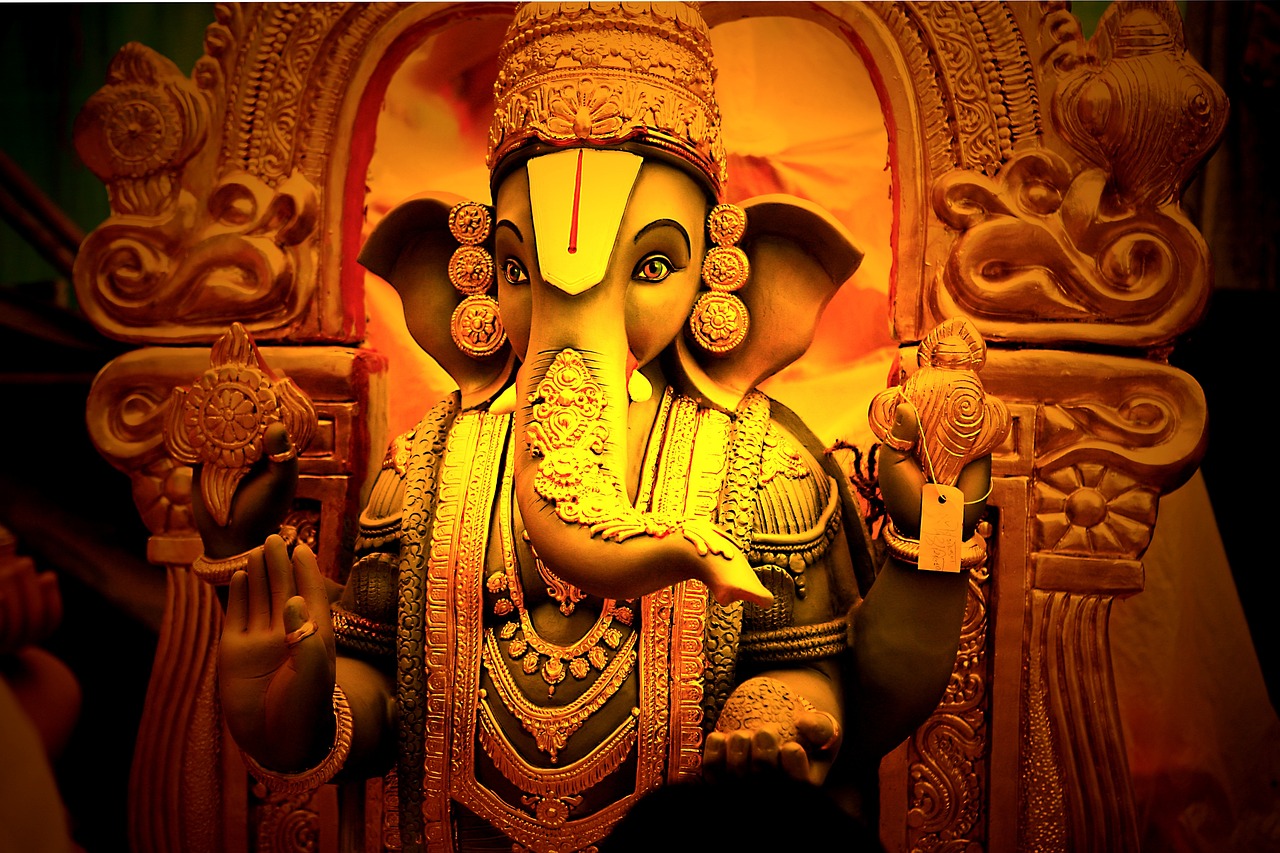
Hinduism is one of the world’s oldest and most complex religious traditions, with roots stretching back over 4,000 years. Unlike many major world religions, Hinduism has no singular founder. Instead, it is a synthesis of various cultural and spiritual traditions that evolved in the Indian subcontinent, particularly around the Indus Valley and Vedic civilizations. The earliest known texts associated with Hinduism are the Vedas, composed around 1500 BCE. These scriptures, written in ancient Sanskrit, include hymns, rituals, and spiritual philosophy. Over time, other critical texts developed, including the Upanishads, Mahabharata, Ramayana, and the Bhagavad Gita—all of which further shaped Hindu doctrine and cosmology.
Hinduism is often described more as a way of life than a formal religion. It encompasses a wide range of practices, deities, and philosophical schools. At its core, however, are shared beliefs such as karma (action and consequence), dharma (duty), moksha (liberation from rebirth), and samsara (cycle of reincarnation).
Unlike Christianity and Islam, Hinduism did not spread widely through proselytism. Its global reach occurred more gradually, often through migration, trade, and later, colonial movements.
-
Southeast Asia was strongly influenced by Hinduism through Indian trade and conquest. Hindu temples and traditions flourished in Cambodia (Angkor Wat), Indonesia (Bali remains predominantly Hindu), Thailand, and Vietnam.
-
In Nepal, Hinduism remains a dominant force, often coexisting with Buddhism in deeply intertwined ways.
During the British colonial era, large populations of Indians were relocated as indentured laborers to Africa, the Caribbean, and Southeast Asia. As a result:
-
Mauritius, Fiji, Guyana, Trinidad and Tobago, and Suriname now have substantial Hindu populations.
-
In South Africa, Hinduism is practiced by descendants of Indian laborers brought in the 19th century.
In the 20th century, especially during the 1960s and 70s, Hindu philosophy found a new audience in the West. Movements such as Transcendental Meditation, Yoga, and Hare Krishna attracted global attention, introducing millions to concepts like meditation, reincarnation, and karma. Today, Hinduism continues to grow in the United States, Canada, the UK, and Australia, largely through immigration and spiritual curiosity.
Hinduism differs markedly from Abrahamic religions (Judaism, Christianity, Islam) but also shares some philosophical terrain with Dharmic faiths like Buddhism and Jainism.
-
Monotheism vs. Polytheism: Christianity and Islam emphasize one omnipotent God, while Hinduism embraces a vast pantheon of gods and goddesses, all seen as manifestations of a single ultimate reality, Brahman.
-
Scriptural Finality: Christianity has the Bible; Islam the Quran. Hinduism includes a wide array of scriptures, none of which are considered the absolute final word.
-
Afterlife: Abrahamic faiths emphasize heaven or hell; Hinduism views the soul as undergoing continuous rebirth (reincarnation) until it attains moksha.
-
Hinduism shares with these two religions the concepts of karma, samsara, and liberation.
-
However, while Hinduism accepts a supreme cosmic force, Buddhism often avoids the concept of a creator god, and Jainism emphasizes extreme non-violence and self-denial.
-
Hindu rituals are more devotional and often focused on deity worship, while Buddhist and Jain practices lean more toward individual ethical practice and meditation.
Today, over 1.2 billion people follow Hinduism, making it the third-largest religion globally.
Where It Is Practiced Most:-
India: Home to over 80% of the global Hindu population. Temples, festivals, pilgrimages, and rituals are part of daily life.
-
Nepal: Officially a Hindu country until 2008; still retains deep Hindu roots.
-
Bali, Indonesia: A unique Hindu enclave in a predominantly Muslim country.
-
Sri Lanka, Bangladesh, and Pakistan: Small Hindu minorities remain, though often marginalized.
-
Western Nations: The U.S., U.K., Canada, and Australia have growing Hindu populations due to Indian diaspora and rising interest in Eastern spirituality.
Hinduism is deeply woven into the cultural, social, and political fabric of India. Its rituals, festivals, temples, and deities are present in nearly every aspect of life.
Reasons for its strong presence include:
-
Historical Continuity: Hinduism developed indigenously and has never faced eradication within India.
-
Cultural Fusion: Hinduism absorbs local and tribal customs, making it remarkably adaptable.
-
Institutional Structures: Temples, spiritual lineages, and religious festivals are deeply organized.
-
Social Hierarchy: Though controversial, the caste system remains a social structure rooted in Hindu tradition, still present in modern India.
Tensions between Hindus and Muslims in India are historically deep-rooted and politically sensitive.
Historical Background:-
Muslim Rule: Between the 12th and 18th centuries, various Muslim dynasties ruled parts of India, including the Delhi Sultanate and the Mughal Empire. During this time, Hindu temples were sometimes destroyed, and forced conversions occurred.
-
British Rule: The British often used a "divide and rule" policy, emphasizing religious divisions to maintain control.
-
Perhaps the most violent chapter in Hindu-Muslim relations. India was split into secular India and Islamic Pakistan, causing mass migration and an estimated 1-2 million deaths during the ensuing riots and massacres.
-
Religious Nationalism: The rise of Hindutva, or Hindu nationalism, has led to increased marginalization of Muslims.
-
Cultural Symbols: Issues like the Ayodhya Ram temple dispute, cow slaughter bans, and communal riots have created deep divisions.
-
Political Exploitation: Politicians often use religion to rally support, especially during elections.
-
Socioeconomic Factors: Muslim minorities in India often face educational and economic disadvantages, further breeding discontent.
Despite these challenges, India remains home to one of the world’s largest Muslim populations, and many communities live in peace. But tensions persist and often flare into conflict when politically or emotionally charged events arise.
Hinduism is not just a religion—it is a civilization, a spiritual philosophy, and a cultural tapestry. Its deep-rooted philosophies continue to influence yoga, wellness, art, and literature across the globe. As it continues to evolve in a globalized world, Hinduism faces challenges: caste discrimination, religious polarization, and cultural dilution. Yet, its emphasis on inner realization, respect for nature, and spiritual diversity continues to captivate both believers and seekers alike. From ancient chants echoing in Himalayan temples to yoga studios in California and incense-filled homes in Mauritius, the soul of Hinduism lives on—fluid, profound, and timeless.