






Kashmir - A Jewel of the Himalayas
History, Faith, Partition, and Timeless Beauty
11/21/2025
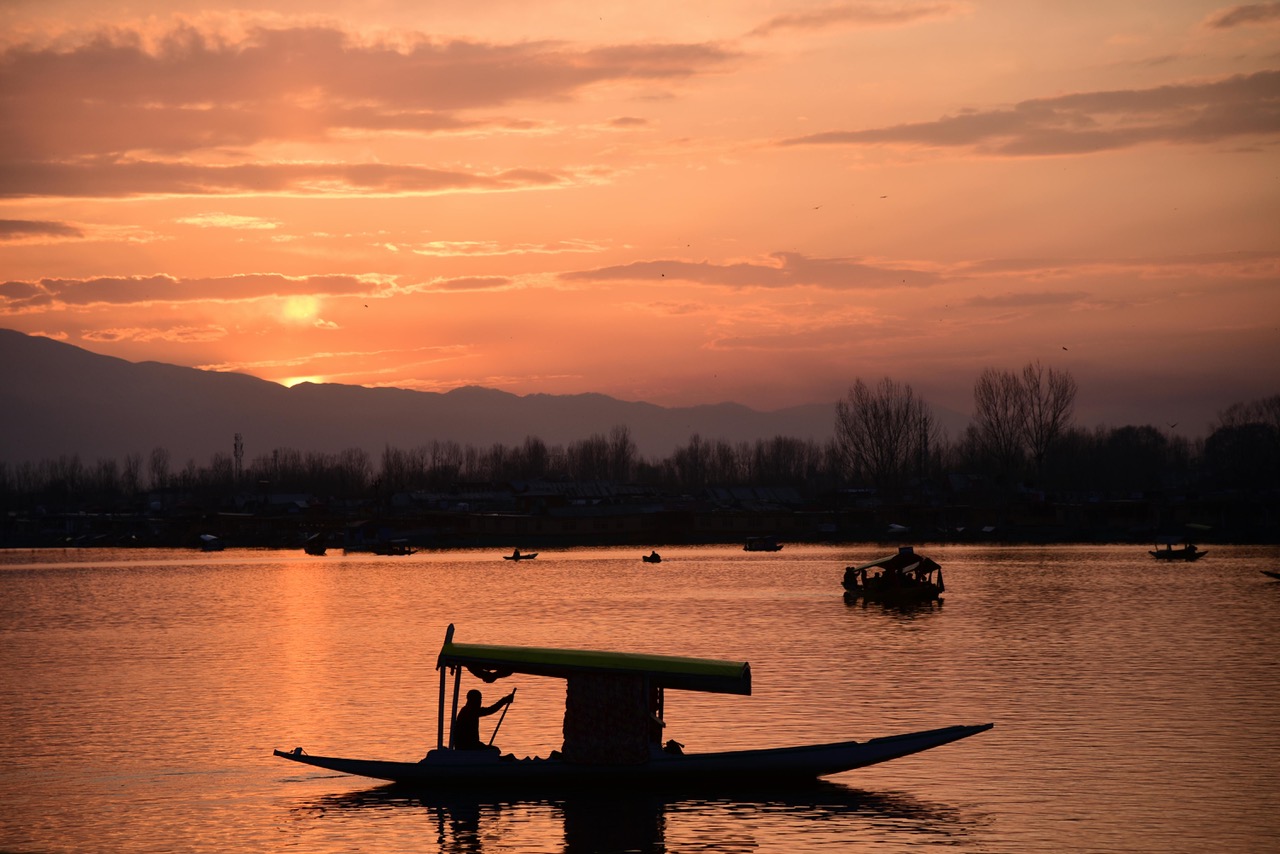
Cradled in the northernmost tip of the Indian subcontinent, Kashmir has long been described as “Paradise on Earth.” Majestic Himalayan peaks, mirror-like lakes, saffron fields, and pastoral valleys form a landscape that has captivated poets, emperors, travelers, and spiritual seekers for centuries. Yet Kashmir is equally defined by its deep religious history, its pivotal role in the 1947 Partition, and the geopolitical complexities that continue to shape its modern identity. This multi-page article explores Kashmir’s layered past, its religious and cultural tapestry, the evolution of its borders, and the enduring serenity of its most iconic gem—Dal Lake.
Kashmir occupies the crown of India, located in the northernmost part of the country, bordered by Pakistan to the west and northwest, China to the east, and the Indian states of Punjab and Himachal Pradesh to the south. Much of the region is mountainous, dominated by the lofty Himalayas and Pir Panjal ranges that embrace the famed Kashmir Valley. The area commonly referred to as “Kashmir” today is part of the Indian union territory of Jammu & Kashmir, formed in 2019 when the former state was reorganized. The Kashmir Valley—lush, green, and breathtaking—is the heartland of Kashmiri culture, known especially for Srinagar, Dal Lake, and centuries-old traditions of hospitality, crafts, and spiritual harmony.
For centuries, Kashmir was known for its pluralistic and spiritually vibrant society. The region’s religious story is layered and stretches back millennia.
Kashmir’s earliest inhabitants followed a blend of Hinduism and ancient Indo-Aryan traditions. Hindu kingdoms ruled the valley for long periods, and the region is referenced in sacred Hindu texts such as the Nilamata Purana. The revered Amarnath Cave, dedicated to Lord Shiva, remains one of the most significant Hindu pilgrimage sites in India.
During the spread of Buddhism across India, Kashmir became a major center for Buddhist scholarship. As early as the 3rd century BCE, under the patronage of Emperor Ashoka, Buddhist monks established monasteries and learning centers across the valley. Some scholars believe that one of the early Buddhist councils to codify the teachings of the Buddha was held in Kashmir.
Islam arrived in Kashmir around the 14th century, primarily through Sufi saints whose message of peace, spirituality, and compassion deeply resonated with local people. This gave birth to Kashmiriyat, a cultural ethos stressing coexistence, tolerance, and shared identity between Hindus, Muslims, and Buddhists. Under Muslim rule, particularly the Shah Mir dynasty and later the Mughals, Islamic influence grew significantly. Mosques, gardens, and Persian-style architecture flourished. Over time, Kashmir’s population became predominantly Muslim, though significant Hindu, Sikh, and Buddhist communities remained.
In the 19th century, Kashmir came under Sikh rule, followed by the Hindu Dogra dynasty, which ruled the princely state of Jammu & Kashmir until the mid-20th century. This period added another chapter to the region’s multi-religious identity.
The Partition of 1947 is one of the most defining events in modern South Asian history, creating the nations of India and Pakistan along religious lines. Princely states—semi-autonomous regions under local rulers—were given a choice to join either nation or remain independent.
At the time of Partition:
-
Kashmir was ruled by a Hindu Maharaja (Hari Singh).
-
The majority of Kashmiris were Muslim.
-
Geographically, Kashmir bordered both India and Pakistan.
This combination made Kashmir a delicate and highly strategic state whose decision carried immense political weight.
In late October 1947, tribal militias from Pakistan’s northwest frontier invaded Kashmir, seeking to bring the Muslim-majority state into Pakistan. Facing advancing forces and lacking sufficient military strength, Maharaja Hari Singh requested military support from India. India agreed—but only if Kashmir formally acceded to the Indian Union.
On October 26, 1947, the Maharaja signed the Instrument of Accession, legally making Jammu & Kashmir part of India.
The accession triggered the first Indo-Pak war (1947–1948). A ceasefire brokered by the United Nations eventually created the Line of Control (LoC), dividing the region:
-
India retained control of about two-thirds of the territory (including the Kashmir Valley, Jammu, and Ladakh).
-
Pakistan gained control of what it calls “Azad Kashmir” and the northern territories of Gilgit-Baltistan.
This territorial and political division persists today.
The majority population in the Kashmir Valley is Sunni Muslim, most tracing their cultural heritage to Sufi traditions. Kashmiri Muslims are known for their warm hospitality, distinct handicrafts (like Pashmina weaving and walnut-carved furniture), and the serene, poetic beauty of their language.
A historically significant Hindu community, the Kashmiri Pandits lived in the valley for thousands of years. Renowned for their scholarship and cultural contributions, they became a minority by the mid-20th century, and many migrated during the conflict that began in the 1980s and 1990s. Their heritage remains a core pillar of Kashmir’s identity.
-
Sikhs living in districts like Baramulla and Tral add to the region’s rich tapestry.
-
Buddhists in Ladakh maintain traditions tied to Tibetan Buddhism, with monasteries like Hemis and Diskit offering extraordinary architectural and spiritual beauty.
This enduring, syncretic cultural philosophy remains one of the region’s most cherished ideals—a reminder of a shared history based on harmony and mutual respect.
No description of Kashmir is complete without Dal Lake—arguably one of the most iconic and beautiful natural features in all of India. Sal Lake is the Jewel of Srinagar
Located in the summer capital of Srinagar, Dal Lake spans approximately 15.5 square kilometers and is framed by snow-draped mountains and Mughal gardens. Its calm waters reflect the shifting colors of the sky, creating a painterly landscape at dawn and dusk.
Dal Lake is famous for:
-
Houseboats: Intricately carved wooden homes that float gently on the lake, a tradition introduced during British colonial times when non-Indians were not permitted to own land.
-
Shikaras: Elegant gondola-like boats, painted in bright colors and used for transport, sightseeing, and floating markets.
A ride on a shikara at sunset is often described as one of the most unforgettable experiences in India.
Unique to Dal Lake, the floating gardens (called raadh) are created using layers of weeds and lotus stems. Farmers cultivate vegetables like tomatoes, cucumbers, and melons directly on the water, reinforcing the deep connection between Kashmiris and their environment.
Kashmir’s landscape is unmatched in its diversity and splendor. Some of the region’s most breathtaking destinations include:
GulmargA world-renowned ski resort with meadows, fir forests, and the Gulmarg Gondola—one of the highest cable cars on Earth.
PahalgamA pastoral paradise known for its river valleys, pine forests, and as the starting point of the sacred Amarnath Yatra.
SonamargMeaning “Meadow of Gold,” Sonamarg offers glaciers, alpine lakes, and mountains bathed in golden light at sunrise.
Mughal GardensThe gardens of Shalimar, Nishat, and Chashme Shahi showcase Persian-influenced landscaping introduced by Mughal emperors.
Each destination adds to Kashmir’s reputation as a land where nature and spirituality meet.
In August 2019, India reorganized the former state of Jammu & Kashmir, revoking its temporary special status and dividing it into two union territories:
-
Jammu & Kashmir
-
Ladakh
This change remains a pivotal moment in the region’s political evolution and continues to shape governance, development, and discourse.
Despite decades of political tension, the people of Kashmir continue to carry their heritage with grace and resilience. Tourism remains a vital lifeline, and visitors from around the world are drawn to its, although one should check with local conditions prior to travel.
-
Natural beauty
-
Handcrafted Pashmina shawls
-
Exquisite Kashmiri cuisine (including Rogan Josh, Kahwa tea, and Wazwan feasts)
-
Spiritual calm
-
Warm culture
The valley’s charm endures, offering travelers a rare experience of history, nature, and soulful hospitality interwoven into everyday life.
Kashmir is more than a place—it is an emotion, a mosaic of history and faith, a crossroads of civilizations, and a sanctuary of breathtaking beauty. From its ancient religious roots to its role in Partition, from its shimmering Dal Lake to its snow-kissed mountains, Kashmir stands as one of the most captivating and complex regions in the world.
Since 1989, First Cabin Travel has created custom luxury-styled itineraries to unique and varied destinations with the majority of bookings derived from repeat clientele and their enthusiastic referrals. First Cabin has come to be known as Your Passport To Excellence. CA Reg: 2018168-40