






Migration of Animals - Serengeti Africa
Nature’s Grand Spectacle Across Tanzania and Kenya
4/26/2025
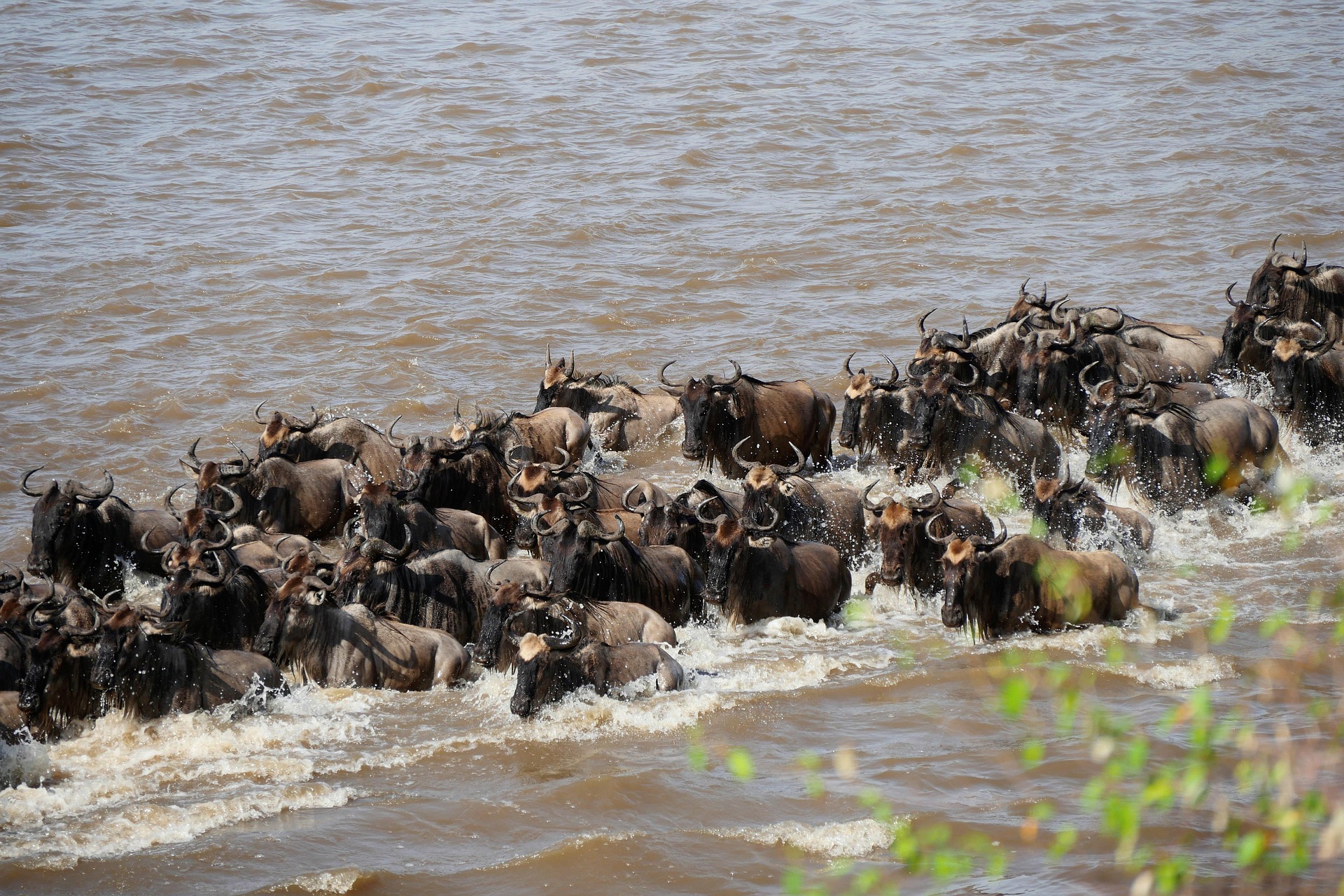
Every year, one of the planet’s most breathtaking wildlife events unfolds across the vast plains of Tanzania’s Serengeti and Kenya’s Maasai Mara. This natural phenomenon, known as the Great Migration, involves more than two million animals moving in a cyclical, endless journey in search of fresh grazing land and water. This awe-inspiring migration is driven by ancient rhythms of survival, triggered by the changing seasons and the need for sustenance.
The journey begins primarily in the Serengeti National Park in northern Tanzania. Around late January to March, the animals gather in the nutrient-rich southern Serengeti plains for calving season. Here, thousands of wildebeest calves are born daily. Predators such as lions, cheetahs, and hyenas circle the herds, knowing that the vulnerable young present an easy opportunity for a meal.
While the migration is often synonymous with wildebeest, these animals are not alone. The great herds include:
-
Wildebeest (over 1.5 million)
-
Zebras (around 200,000)
-
Thomson’s gazelles (nearly 500,000)
-
Grant’s gazelles
-
Elands
-
Topis
Together, these herbivores form a colossal mass of life, followed relentlessly by an army of predators including lions, leopards, hyenas, wild dogs, and crocodiles. Each species plays a role: zebras often lead the migration, their keen eyesight and memory helping guide the herds, while wildebeest rely on instinct and numbers. Gazelles, lighter and faster, dot the edges of the moving throngs.
The primary reason for the migration is the search for fresh grass and water. The Serengeti ecosystem is shaped by seasonal rainfall patterns. Once the southern plains dry out, typically in April to May, the herds move northwest toward the Grumeti River and, eventually, across the border into Kenya’s Maasai Mara by July or August.
The cycle follows the rains:
-
Short rains (October–November) rejuvenate grasses in the Serengeti.
-
Long rains (March–May) provide a lush green landscape, after which the land begins to dry, forcing animals to move.
This nomadic behavior is deeply ingrained in the DNA of these animals. It is not just a journey; it is survival itself.
Perhaps the most iconic and heart-stopping moments of the migration are the river crossings, particularly across the Mara River. This event, typically taking place from July through September, is fraught with danger. The river is a deadly gauntlet where crocodiles lie in wait, some of the largest on Earth, having evolved to specialize in this annual feast. The currents are swift, the banks steep and muddy, and panic often erupts within the herds, causing chaos, trampling, and mass drownings.
The crossings are pure survival instinct: hesitation means death, but charging forward could also mean death. It is an extraordinary spectacle of bravery, terror, and instinct.
The Great Migration is perilous at every stage:
-
Predators: Lions, cheetahs, hyenas, and crocodiles take heavy tolls on the herds.
-
Exhaustion and starvation: The journey is grueling, and weak or sick animals often fall behind.
-
Drowning: Thousands drown during the river crossings.
-
Injuries: Broken legs, infections, and wounds from predator attacks claim many lives.
Out of the millions that start the migration, it is estimated that around 250,000 wildebeest and 30,000 zebras perish each year.
In recent decades, poaching has emerged not just as a threat to individual animals but as a force altering the entire migration. While ivory and bushmeat poaching remain issues, a more subtle and sinister tactic has appeared: the burning and manipulating of grasslands. Poachers and illegal grazing operations have been known to burn sections of grassland, altering the availability of grazing land. This manipulation can confuse the herds, cause premature migrations, or force them into areas where they are easier to hunt or where livestock diseases can spread.
Efforts by conservation organizations and local governments, especially in Tanzania and Kenya, aim to curb these practices. Anti-poaching units, community education, and stricter regulations have helped, but the battle is ongoing.
Timing is crucial to witness the Great Migration at its best. While the migration is continuous year-round, the most dramatic scenes depend on where and when you go:
-
January–March: Calving season in the Southern Serengeti (Ndutu region) — great for predator action.
-
April–May: Herds moving through Central Serengeti — fewer tourists, lush landscapes.
-
June–July: Moving toward the Western Corridor and Grumeti River crossings.
-
July–September: Crossing the Mara River into Kenya — best chance for witnessing dramatic river crossings.
-
October–December: Herds returning south through the eastern Serengeti after short rains.
The Mara River crossings between July and September are the most famous and popular time for safari-goers, but no matter the season, the migration is an ever-moving marvel.
The migration is a continuous, cyclical event — it happens once annually, but because the herds are always moving through different stages (calving, moving, crossing rivers, returning), it feels like a never-ending circle rather than a single, isolated event. You can think of it as a year-long loop with key highlights depending on rainfall and geography.
The Great Migration is not just about movement; it is about life, death, perseverance, and the eternal dance of nature. It reminds us of the delicate balance that sustains ecosystems and the sheer tenacity of life in its purest form. However, with poaching pressures, climate change, and human encroachment, this awe-inspiring event is increasingly at risk. Safeguarding the migration is not just about protecting animals; it is about preserving a living testament to the primal forces that shape our natural world.
To witness the Great Migration is to witness a piece of Earth’s soul — raw, magnificent, and humbling beyond measure. Since 1989, First Cabin Travel has arranged luxury-styled itineraries with the mainstay of bookings derived for repeat clientele and their enthusiastic referrals.
When choosing a ground operator to assist with you travel plays choose wisely - Choose First Cabin - Your Passport to Excellent - CA Reg 2016168-40