






Opium Weights: History, Authenticity, and Modern Status
The Origin and Use of Opium Weights
3/27/2025
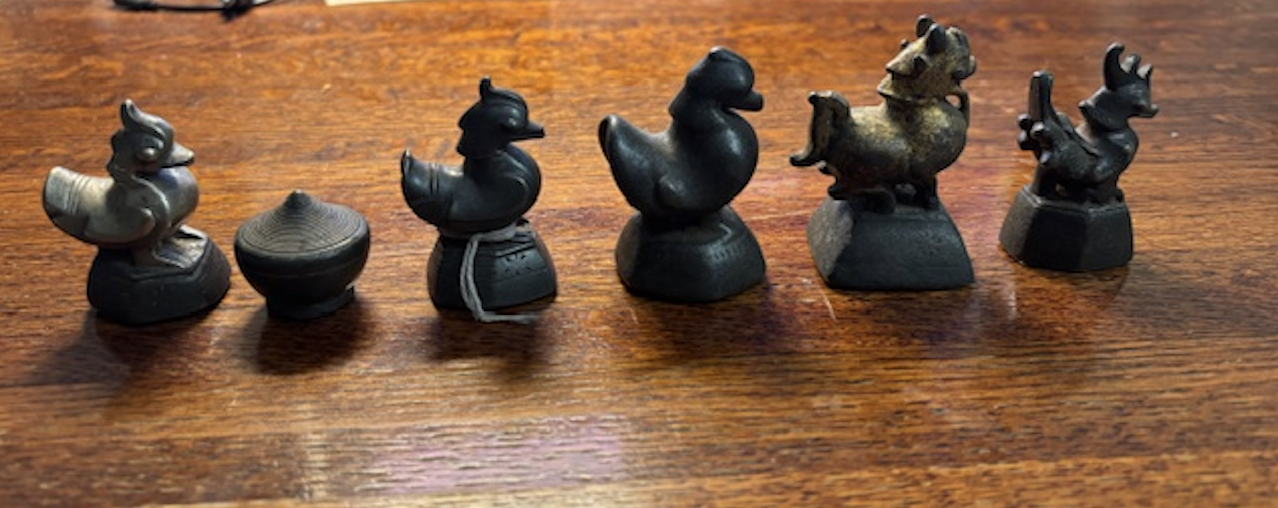
Opium weights, also known as Burmese weights or Chinthe weights, are small, intricately cast metal weights historically used in Southeast Asia, particularly in Burma (Myanmar), Thailand, Laos, and Cambodia. These weights, commonly shaped like mythical animals, were primarily used to measure commodities such as opium, spices, and precious metals. Over time, they have become highly sought-after collectibles due to their historical and artistic value. This article explores their origins, usage, decline, authenticity, and the prevalence of genuine examples in today’s market.
The earliest known opium weights date back to the late 16th and early 17th centuries, primarily in Burma, where they were used under the rule of the Toungoo and Konbaung dynasties. These weights were standardized according to the traditional mass system of tical (kyat), with weights ranging from small denominations (less than one tical) to larger ones of 50 or more ticals.
Crafted from bronze, lead, or brass, opium weights were often shaped like creatures from Burmese mythology. The most common figures included the Chinthe (a lion-like creature), the Hintha (a mythical bird akin to a goose or swan), and the To (a stylized horse or dragon-like creature). These weights were used in local markets, placed on balance scales to measure goods, and were regulated by local authorities to ensure fair trade.
Countries That Used Opium Weights the MostWhile Burma (Myanmar) is most closely associated with opium weights, these objects were also used in:
Thailand: Often found in border regions, where trade routes connected Burma and Thailand.
Laos and Cambodia: Smaller-scale use, but with some weights discovered in ancient trade routes.
China and Vietnam: Though less common, opium weights made their way into southern China and northern Vietnam through trade interactions.
These regions had vibrant trade networks, and weights were essential for ensuring fair commercial exchanges. Traders dealing in opium, silver, gold, and other commodities relied heavily on these standardized tools.
By the late 19th and early 20th centuries, the use of opium weights began to decline due to several factors:
Colonial Rule and Currency Systems – As European colonial powers, particularly the British in Burma, introduced standardized monetary and measurement systems, traditional weights lost their official function.
Legal Restrictions on Opium – As governments began regulating or banning opium trade, the need for specialized weights diminished.
Introduction of Modern Scales – Industrialization brought more precise measurement tools, rendering the use of opium weights obsolete.
By the mid-20th century, opium weights had almost entirely vanished from trade, becoming artifacts rather than functional tools.
Today, genuine opium weights are no longer in active commercial use. However, they remain significant as:
Collector’s Items – Antique dealers and collectors highly value original opium weights, particularly well-preserved examples with clear markings.
Museum Exhibits – Many museums, especially those focused on Southeast Asian history, display opium weights as cultural relics.
Decorative Pieces – Some individuals use them as decorative or spiritual objects, given their historical and artistic appeal.
Due to the growing demand for opium weights among collectors, the market is now flooded with replicas. Distinguishing genuine opium weights from fakes can be challenging. Here are some key indicators of authenticity:
Material and Patina – Authentic weights are made of aged bronze or brass, with a distinct patina that develops over centuries.
Markings and Verification Stamps – Many real weights have official markings from Burmese kings, indicating their approval for trade use.
Wear and Craftsmanship – Genuine weights exhibit signs of age and use, while modern replicas often have artificial distressing to mimic authenticity.
Weight Accuracy – Authentic opium weights adhere to historical weight standards, while replicas may deviate due to poor craftsmanship.
While some genuine opium weights can still be found, particularly in Burma and Thailand, they are increasingly rare. Many on the market today are reproductions created to cater to tourists and collectors.
The exact number of surviving genuine opium weights is unknown, but experts estimate that only a few thousand remain in circulation. Many have been lost, melted down, or confiscated over the years. Museums, private collections, and antique markets still hold authentic pieces, but their availability is dwindling.
Opium weights are fascinating historical artifacts that played a crucial role in Southeast Asian trade for centuries. Although no longer used for their original purpose, they remain a testament to the region’s rich commercial and artistic heritage. The rarity of genuine opium weights makes them highly valuable, while the abundance of replicas complicates the market for collectors. Whether as historical relics, collectibles, or decorative pieces, opium weights continue to captivate those interested in Southeast Asian culture and trade history.