






Osuna Ranch - Rancho Santa Fe
The Heart of the Covenant
9/28/2025
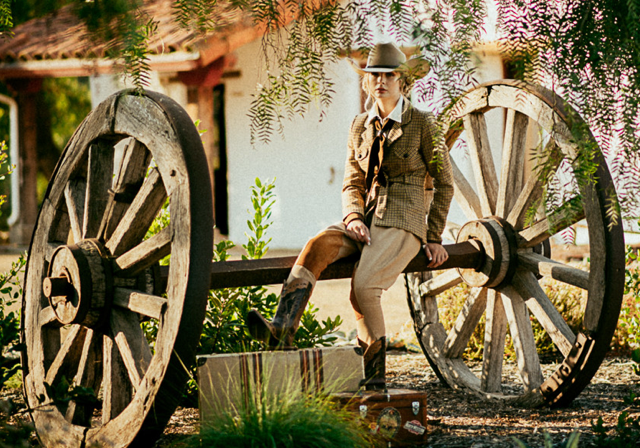
The story begins long before Rancho Santa Fe became synonymous with prestige and rural elegance. In 1845, during California’s Mexican era, the Rancho San Dieguito land grant was awarded to Don Juan María Osuna, San Diego’s first alcalde. On a quiet rise within that grant, his family constructed an adobe homestead in the early 1830s. Its earthen walls and low tile roof offered more than shelter—they embodied a way of life tied to land, cattle, and community.
For decades, the Osuna family maintained their ranch, but as generations passed and fortunes shifted, the holdings dwindled. By the early twentieth century, the adobe and its surrounding lands had slipped from Osuna hands. Yet the story was not ending—it was about to be written anew.
The Railroad and the Architect
In 1906, the Atchison, Topeka & Santa Fe Railway’s land subsidiary acquired Rancho San Dieguito. Their ambitions were practical: eucalyptus forests for railroad ties. The crop failed, but the company recognized the land’s potential as an idyllic residential enclave. To shape this new vision, they turned to a young, understated architect—Lilian J. Rice.
Rice’s genius lay not in imposing grandeur but in weaving continuity. She gave Rancho Santa Fe its quiet Spanish Colonial Revival heart, designing the Inn, the village core, and private estates with a rare sensitivity to landscape and tradition. In 1924, she turned her hand to the weathered Osuna Adobe. Rather than erase the past, Rice respected it—repairing, adapting, and reimagining the adobe so it could stand as part of the Covenant’s living fabric. In her approach, one sees the seed of Rancho Santa Fe’s identity: modern comfort rooted in historic grace.
A Ranch Through the Years
Over the decades, Osuna Ranch bore witness to change. Horses replaced cattle; equestrian culture grew as an essential thread in Rancho Santa Fe’s tapestry. Ownership shifted, but the adobe and its fields remained a landmark known to residents as a reminder of where the Covenant began.
In 2006, recognizing both its fragility and its importance, the Rancho Santa Fe Association purchased the 27-acres of Osuna Ranch. As the last vestige of the original San Dieguito land grant, this act was not only a real estate transaction, it was a covenantal gesture, purchased with Covenant residents’ “open space” funds. It reflected gratitude for the past and forward thinking for the future, an acknowledgment that the community’s soul resided as much in preservation as in development
The Heart of the Covenant
Today, Osuna Ranch is a working equestrian facility, its pastures dotted with horses and its adobe standing firm against time. Riders move along trails that connect to more than sixty miles of private pathways, sustaining Rancho Santa Fe’s promise of rural beauty and freedom. The Osuna Committee, a volunteer body within the Association, guides its stewardship—ensuring that the adobe is maintained, the ranch remains active, and the community has a living link to its origins.
But Osuna is more than a facility. It is a gathering place, a landmark, and a symbol. In a community defined by the Covenant—an agreement that beauty and open space matter as much as buildings—Osuna is the purest expression of that idea.
Preserving Osuna in Perpetuity
There will always be pressures: the lure of development, the whispers of short-term gain. Yet, for most, to sell Osuna would be to unravel more than acreage. It would sever the community from its own story.
Osuna Ranch anchors Rancho Santa Fe’s identity in ways that cannot be replicated. It embodies the Mexican Rancho era, Lilian Rice’s vision, and a century of equestrian culture. Its fields are not just open space; they are a breathing landscape that shapes property values, lifestyle, and pride of place. Its trails are arteries of movement and connection. Its adobe is one of the last tangible links to California’s earliest civic leaders.
Arguably, to sacrifice it would be to trade permanence for impermanence, heritage for speculation. Preserving it affirms that Rancho Santa Fe is not merely a collection of estates, but a community bound by history, design, and covenantal trust. Standing at Osuna Ranch at dusk, when the adobe walls glow with the last light and the sound of horses carries across the fields, one feels the weight of continuity. Rather than fall onto a developer’s map, it inherently belongs to the Covenant, to the community, and to the generations who will walk its trails long after us.
In preserving Osuna, Rancho Santa Fe preserves itself. It keeps faith with its past, protects the beauty of its present, and safeguards the promise of its future.
Photo Credit: Rancho Santa Fe Historical Society / Rancho Santa Fe Association / Fashion Photo: Helen Merwin