






Singapore - The Lion City
a City of Precision, Prosperity, and Pride
11/10/2025
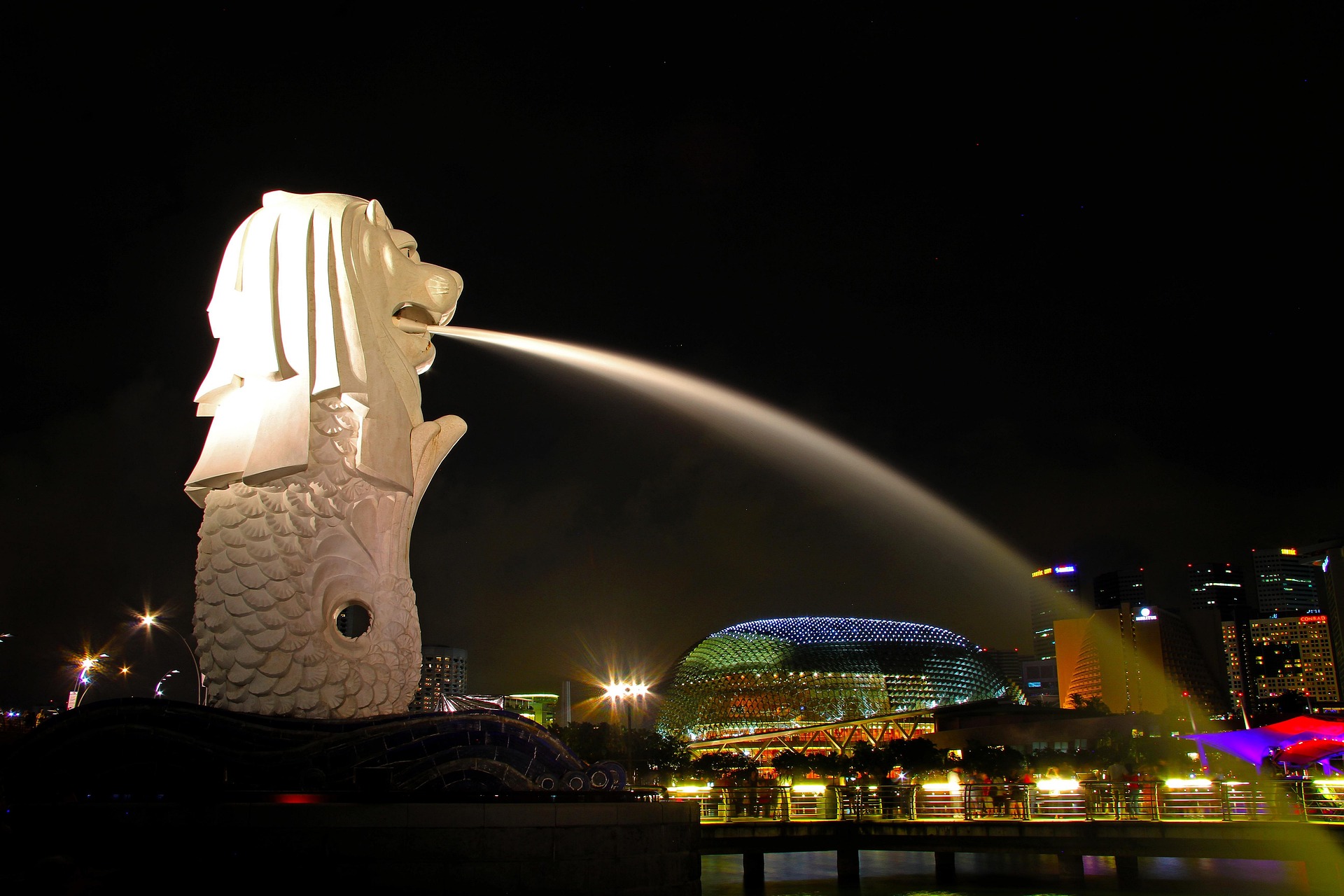
The island nation of Singapore, whose name is derived from the Sanskrit words “Simha” (lion) and “Pura” (city), meaning “Lion City,” has a history both ancient and astonishingly modern. Its early roots trace back to the 14th century when it was known as Temasek, a Malay fishing village that became a bustling trading port due to its strategic location between India and China. In 1819, Sir Stamford Raffles of the British East India Company recognized Singapore’s potential as a free port, establishing it as a key trading hub in Southeast Asia. The island flourished under British rule, attracting Chinese, Indian, and Malay immigrants who would shape its diverse cultural fabric.
World War II brought turmoil when Japan occupied Singapore from 1942 to 1945. Following the war, the British reclaimed control, but the winds of independence were blowing strong. In 1963, Singapore joined the Federation of Malaysia but separated two years later to become a sovereign nation on August 9, 1965. Under the visionary leadership of Prime Minister Lee Kuan Yew, Singapore transformed from a struggling post-colonial outpost into one of the most prosperous nations in the world—an icon of efficiency and order.
Singapore operates under a parliamentary representative democratic republic. The President serves as the ceremonial Head of State, while executive power lies primarily with the Prime Minister and the Cabinet. The People’s Action Party (PAP) has governed Singapore continuously since independence, emphasizing meritocracy, social stability, and economic discipline. The government’s hallmark is its pragmatic and corruption-averse nature—traits that have contributed to Singapore’s reputation as one of the world’s cleanest and most efficiently governed states. Elections are held regularly, and although political diversity exists, the PAP’s long-standing dominance is supported by public trust in its results-driven leadership. The nation’s judiciary is highly respected, independent, and known for its meticulous enforcement of the rule of law.
Singapore is famous—and sometimes infamous—for its strict laws, which play a central role in preserving its orderliness. The philosophy underpinning this discipline is that societal harmony stems from personal responsibility and civic respect.
Among its most notable rules:
-
Littering, vandalism, and spitting are punishable by heavy fines or corrective work orders.
-
Chewing gum importation and sale are largely banned to maintain public cleanliness.
-
Drug trafficking carries the death penalty, one of the harshest stances in the world.
-
Smoking is heavily restricted in public spaces.
-
Jaywalking, graffiti, and disruptive behavior are treated seriously, reflecting the nation’s intolerance for disorder.
While some outsiders may view these regulations as excessive, most Singaporeans see them as essential to maintaining the country’s enviable safety, cleanliness, and civility. The result: a city that feels both secure and serene, even in the midst of urban bustle.
Singapore is a melting pot of cultures where Chinese (approximately 75%), Malays (15%), Indians (7–8%), and a smaller Eurasian and expatriate community coexist harmoniously. The country’s **four official languages—English, Mandarin, Malay, and Tamil—**reflect this multicultural identity. English serves as the administrative and business lingua franca, while each ethnic group proudly preserves its cultural traditions, festivals, and cuisine.
Religious tolerance is another pillar of Singapore’s social stability. You’ll find Buddhist temples beside Hindu shrines, Islamic mosques near Christian churches—a peaceful coexistence that symbolizes the nation’s unity in diversity.
Despite its modest size—a mere 733 square kilometers—Singapore is packed with world-class attractions. Each district offers a distinct experience:
-
Marina Bay Sands & Gardens by the Bay: An architectural and horticultural marvel, the trio of hotel towers crowned by a SkyPark overlooks the futuristic Supertree Grove and the climate-controlled domes of Gardens by the Bay.
-
Sentosa Island: A resort paradise offering Universal Studios Singapore, pristine beaches, and luxury hotels.
-
Singapore Botanic Gardens: A UNESCO World Heritage Site famed for its National Orchid Garden.
-
Chinatown, Little India, and Kampong Glam: Cultural quarters brimming with history, art, temples, and culinary delights.
-
Orchard Road: Singapore’s answer to Fifth Avenue—lined with luxury boutiques, fine dining, and international fashion houses.
-
Clarke Quay and Boat Quay: Vibrant riverfront areas offering nightlife, dining, and views of the city skyline.
Every corner of Singapore seems designed for aesthetic appeal and efficiency, blending modern architecture with tropical charm.
Singaporean cuisine is an edible reflection of its ethnic diversity—a symphony of Chinese, Malay, Indian, and Peranakan influences. Eating is a national pastime, and food courts known as hawker centers are the heart of local life.
Among its must-try dishes:
-
Hainanese Chicken Rice: The national dish—poached chicken served with fragrant rice and chili sauce.
-
Chili Crab: A messy but irresistible seafood delight.
-
Laksa: A spicy coconut-based noodle soup.
-
Satay: Skewered, grilled meats served with peanut sauce.
-
Roti Prata, Nasi Lemak, and Char Kway Teow: Beloved comfort foods across ethnic lines.
The city-state’s culinary excellence is so profound that UNESCO recognized Singapore’s hawker culture as part of its Intangible Cultural Heritage of Humanity.
The official currency is the Singapore Dollar (SGD), symbolized as S$. The economy is one of the strongest globally, built on finance, technology, trade, logistics, and biomedicine.
Singapore’s Changi Airport and Port of Singapore rank among the busiest and most efficient worldwide, anchoring its role as a global gateway. The country’s financial prudence, pro-business policies, and innovation incentives make it a magnet for multinational corporations and expatriate talent.
Singapore’s skyline mirrors its ambition—gleaming towers, verdant parks, and infrastructure that ranks among the best in the world. The government’s Housing Development Board (HDB) ensures that over 80% of residents live in high-quality public housing, demonstrating an impressive model of urban planning.
Education is rigorous and globally respected, while healthcare ranks among the finest. Public transport is efficient, clean, and punctual—a reflection of the city’s meticulous organization.
Culturally, Singaporeans balance traditional values with cosmopolitan modernity. Festivals such as Chinese New Year, Hari Raya Puasa, Deepavali, and Christmas are celebrated with equal enthusiasm. Art galleries, museums, and international events such as the Singapore Grand Prix further highlight the nation’s global stature.
Singapore is more than a destination—it is a living testament to human vision and discipline. From its humble fishing village origins to its current status as a global powerhouse, the Lion City embodies what can be achieved through unity, education, and forward thinking. Its streets glisten, its laws are respected, and its people—drawn from every corner of the world—live in remarkable harmony. Visitors leave not only impressed by its cleanliness and order but inspired by the possibilities of what thoughtful governance and cultural respect can create. Indeed, Singapore stands as Asia’s beacon of precision, prosperity, and pride—a city where tradition meets technology, and where every gleaming high-rise tells a story of determination and dream.