






Strait of Hormuz - Bottleneck at Sea
the efforts to build routes around the strait
9/7/2026
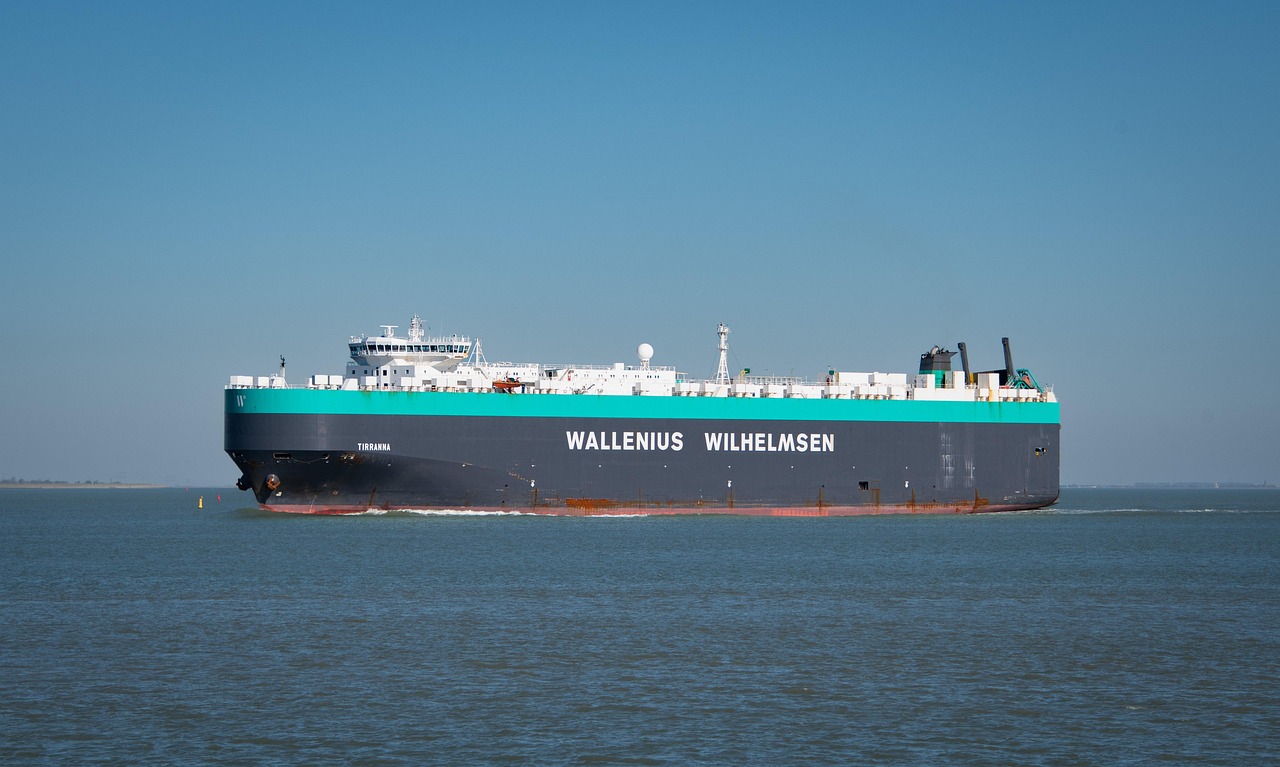
For centuries, the Strait of Hormuz has given the powers along its shores influence far beyond the size of the waterway itself. Before the petroleum age, it connected the trading ports of the Persian Gulf with the commercial networks of the Indian Ocean. Today, it links some of the world’s largest energy producers with the countries, factories, transportation systems, and households that depend on their exports.
Its importance comes from an unusually powerful combination of geography, geology, and investment. Enormous oil and gas resources lie around the Persian Gulf. Much of the infrastructure built to export them sits inside that gulf. Hormuz is its only natural maritime outlet.
Countries have spent decades trying to reduce this dependence. Saudi Arabia transports oil across its territory to the Red Sea. The United Arab Emirates sends crude to Fujairah, outside the strait. Iraq is pursuing routes toward the Mediterranean, while Iran has invested in an export terminal on the Gulf of Oman. Ports, storage facilities, and overland freight corridors are also expanding.
These projects can substantially reduce the consequences of disruption. Replacing Hormuz entirely, however, requires much more than building a few additional pipelines.
This article uses 2025 as a baseline for normal trade flows and includes developments reported through early September 2026. Dates distinguish operating infrastructure from expansion plans and conditions during the 2026 disruption.
The geography explains the starting point. The Strait of Hormuz curves between Iran to the north and Oman’s Musandam Peninsula to the south, connecting the Persian Gulf to the Gulf of Oman and the wider Indian Ocean. At its narrowest, it is approximately 21 miles, or 34 kilometers, across. Ships entering or leaving the gulf must navigate this confined passage.
For an exporter loading a tanker inside the gulf, there is no second sea exit. This distinguishes Hormuz from a shortcut such as the Suez Canal. When Suez is unavailable, ships traveling between Europe and Asia can take the much longer route around Africa. A tanker inside the Persian Gulf cannot sail around a continent to avoid Hormuz. Its cargo must first reach a different coastline by some other means.
That constraint existed long before anyone drilled an oil well.
During the medieval period, Hormuz became an important commercial center linking maritime trade with markets farther inland. The original settlement stood on the Iranian mainland; around the beginning of the fourteenth century, its population and commercial activity shifted to an island offering greater protection from attacks. The island lacked fresh water and depended on imported supplies, yet prospered because merchants valued its location, markets, and connections. Goods arriving by sea could be redistributed to smaller gulf ports and then carried along inland trade routes.
Its success demonstrated an enduring principle of commerce: a place does not need abundant local resources to become wealthy if it organizes the movement of other people’s goods.
The Portuguese recognized that opportunity when they entered the Indian Ocean. Afonso de Albuquerque attacked Hormuz in 1507 and established firmer Portuguese control in 1515. In 1622, Persian forces under Shah Abbas, supported by ships of the English East India Company, expelled the Portuguese. Trade subsequently shifted toward Bandar Abbas on the mainland.
Over the following centuries, British influence grew through naval power and agreements with coastal rulers. Treaties in 1820 and 1853 helped establish a maritime order along what became known as the Trucial Coast. Protecting commerce and the approaches to British India was central to Britain’s interest. Its treaty system also restricted the independence of local rulers in dealing with other foreign powers. British supremacy in this part of the gulf lasted until withdrawal in 1971.
The commodities moving through the region changed, but the strategic logic remained recognizable. Powers sought influence over the passage because controlling access to markets could produce wealth, diplomatic influence, and military advantage.
The petroleum industry magnified that logic enormously.
As oil production developed around the gulf during the twentieth century, producers constructed facilities to move crude from fields to nearby coastal terminals. Refineries, storage tanks, offshore loading systems, and supporting industries followed. Once these networks existed, expanding them was often more economical than creating entirely separate export systems across deserts, mountains, and international borders.
Tankers reinforced the advantage. They can move enormous quantities of liquid cargo over long distances, and their destinations can change with demand. A pipeline has a fixed route and depends on specific connections. A tanker leaving Hormuz can travel toward any suitable receiving terminal.
The resulting concentration was immense. According to the International Energy Agency, approximately 20 million barrels a day of crude oil and petroleum products passed through Hormuz in 2025, representing roughly one-quarter of global seaborne oil trade. About 80 percent headed toward Asia.
That dependence reflects the relationship between gulf production and Asian consumption. Large industrial economies need reliable supplies for transportation, manufacturing, and petrochemicals. Gulf producers have developed long-standing commercial relationships with those buyers.
However, a country does not need to import much oil directly through Hormuz to experience the consequences of disruption. Oil markets connect suppliers and customers across regions. If an Asian refinery loses access to a gulf cargo, it may compete for supplies from elsewhere. Other buyers then face higher prices or have to seek replacement cargoes themselves.
The shock spreads through freight, manufacturing, agriculture, and household spending. More expensive diesel raises the cost of moving goods. More expensive aviation fuel affects airlines. Higher prices for petroleum feedstocks can increase costs for plastics and other manufactured materials.
Hormuz also carries much more than crude oil. Refined fuels and other petroleum products travel through it, while container ships and bulk carriers connect gulf economies with overseas suppliers. Food, machinery, consumer goods, and industrial inputs depend on these shipping connections.
For countries inside the gulf, the waterway therefore serves two essential functions: it carries exports that earn national income, and it admits imports that support everyday economic life. An oil pipeline to another coast can protect part of the export economy without solving the problem of bringing food or machinery into a gulf port.
The strategic danger became especially visible during the Iran–Iraq War of 1980–1988. Attacks on commercial shipping developed into the “Tanker War,” drawing outside naval forces into the conflict. In 1987, the United States began escorting reflagged Kuwaiti tankers under Operation Earnest Will. Mines and attacks on ships demonstrated that even heavily protected trade could remain vulnerable.
Disruption does not require a permanent physical barrier across the strait. Shipping companies must consider crew safety, insurance, vessel availability, and the possibility of losing extremely valuable ships and cargoes. A passage can remain geographically navigable while becoming commercially difficult to use.
The 2026 crisis illustrated the scale of that exposure. In an assessment published on June 22, the IEA reported that oil flows through Hormuz had fallen from around 20 million barrels a day before the conflict to an average of 2.7 million during March, April, and May. That historical comparison should not be mistaken for a measurement of traffic in September, but it shows how sharply normal trade can contract.
The search for alternatives begins with Saudi Arabia, which has a major geographical advantage: coastlines on both the Persian Gulf and the Red Sea.
Its East–West pipeline system connects eastern oil infrastructure with Yanbu on the Red Sea. Oil transported across the kingdom can be loaded onto tankers without entering Hormuz. Aramco describes this connection as providing flexibility to export from either coast.
The system became particularly valuable during the 2026 disruption. In May, Aramco’s chief executive said it had reached its maximum capacity of 7 million barrels a day. The IEA subsequently reported that oil exports from Yanbu had risen from approximately 2 million barrels a day before the war to more than 5 million in early June. Pipeline throughput and tanker exports are different measurements: some oil moving west can supply domestic facilities rather than being exported immediately.
The Saudi route also shows why bypassing one chokepoint does not eliminate every maritime risk. Cargoes leaving Yanbu for Asian markets generally travel south through the Red Sea and Bab el-Mandeb before reaching the Indian Ocean. Cargoes bound for Europe can travel north toward Suez. The route changes the pattern of exposure according to the destination.
Saudi infrastructure also cannot automatically absorb the exports of neighboring countries. Those producers need suitable connections, commercial agreements, and available capacity. A large pipeline inside one country is not a shared regional outlet simply because other countries would benefit from using it.
The UAE has pursued a different geographical solution. Its Abu Dhabi Crude Oil Pipeline carries oil from Habshan to Fujairah on the Gulf of Oman, outside Hormuz. ADNOC’s documentation records that the line was commissioned in July 2012. It created a direct connection between Abu Dhabi’s onshore oil network and an export terminal on the country’s eastern coast.
The UAE is now expanding this option. In May 2026, ADNOC publicly identified a new West–East Pipeline project intended to double its export capacity through Fujairah. This is an expansion objective, rather than evidence that the additional capacity is already fully available.
Such investment requires more than laying pipe. The receiving port needs enough storage, loading equipment, and tanker capacity to handle the increased flow. Connections must also bring the intended oil grades into the system. The useful capacity of the whole route is determined by whichever component becomes the bottleneck.
Fujairah’s importance extends to general freight. In July 2026, DP World announced an agreement in principle to develop additional container, multipurpose, and general cargo terminals on the UAE’s east coast. Facilities outside Hormuz give shippers more options for reaching regional customers overland.
Iraq faces a more complicated problem. Its southern oil-producing region around Basra depends heavily on gulf exports, while alternative maritime outlets require long connections across Iraq and cooperation with neighboring states.
Northern routes toward Turkey and the Mediterranean provide an alternative for some production. But their existence does not mean the large southern fields can immediately send all their output north. The internal network must connect the relevant fields to the export system.
By late August 2026, Iraq was accelerating preparations for proposed pipelines running from Basra through Haditha toward Fishkhabour, with a separate branch toward Baniyas on Syria’s Mediterranean coast. Reporting described technical and commercial preparations ahead of contract signing, making it essential to distinguish these plans from completed capacity.
Iraq and Jordan have also revisited a long-discussed pipeline from Basra to Aqaba on the Red Sea.
These proposals could transform Iraq’s export flexibility. They also introduce dependencies on transit countries, border agreements, security arrangements, and maintenance across long distances. A Mediterranean or Red Sea outlet provides valuable choice, but the political reliability of the route matters alongside its engineering.
Iran has its own reason to seek an alternative. Although its position along Hormuz gives it influence over the passage, Iranian exports also depend on access to the sea.
The Goreh–Jask project was designed to move crude to Jask on the Gulf of Oman. Its development illustrates the difference between announced capacity and practical performance. The U.S. Energy Information Administration reported that, as of mid-2024, the pipeline could transport around 300,000 barrels a day despite a nameplate capacity of 1 million. Additional pumping, storage, and loading infrastructure remained necessary. That dated assessment establishes the project’s development difficulties rather than its exact present throughput.
A terminal’s inauguration is therefore only one milestone. The strategic benefit comes when it can reliably receive oil, store it, load ships, and sustain deliveries over time.
Oman occupies a different position because much of its coastline already lies outside Hormuz. Its investments in Duqm and Ras Markaz create facilities for storing, processing, and shipping energy directly from the Arabian Sea side of the region.
OQ reported in October 2025 that Ras Markaz had 26.7 million barrels of storage capacity, including capacity dedicated to the Duqm refinery. It also announced a partnership with Royal Vopak to develop the wider storage and terminal business.
Storage outside Hormuz provides a cushion during disruption. It does not, by itself, solve the problem of moving newly produced oil out of a field inside the gulf. If a shipment must cross Hormuz to reach an Omani tank farm, the tank farm provides inventory protection after delivery; it has not created a new route from the field.
Natural gas presents an even harder bypass problem. In 2025, LNG moving through Hormuz represented almost one-fifth of global LNG trade. Qatar’s regional Dolphin pipeline supplies gas to the UAE and Oman, but the IEA identified limited spare pipeline capacity and little unused capacity at Oman’s LNG export facilities.
An oil pipeline cannot transport LNG as a substitute cargo. Large-scale gas diversion would require suitable gas pipelines and liquefaction plants outside the strait, together with specialized storage and loading equipment. Consequently, successful crude-oil bypass projects leave a substantial part of the region’s energy exposure unresolved.
For ordinary merchandise, companies are developing routes that combine ocean shipping with road or rail transport. The World Trade Organization documented new arrangements in 2026 using ports outside Hormuz and inland corridors to maintain access to gulf markets.
DP World, for example, offers connections through Omani ports including Sohar and Salalah, followed by onward delivery. Such arrangements can help move food, manufactured goods, and industrial supplies when direct gulf shipping is disrupted
Overland routes, however, have practical limits. Unloading containers, clearing customs, arranging trucks, and crossing borders introduce additional stages. They can sustain important trade without necessarily matching the cost or volume of direct service by large ships. Road transport also cannot realistically replace the enormous daily liquid volumes carried by the region’s tanker fleet.
The central question is therefore how much additional usable capacity each alternative provides.
A pipeline already carrying oil before a crisis cannot contribute its entire rated capacity as new relief. Only the unused portion is potentially available, and even that depends on connected production, port capacity, and operating conditions. Before the 2026 crisis, the IEA estimated approximately 3.5–5.5 million barrels a day of available alternative capacity through Saudi Arabia and the UAE—well below normal Hormuz flows.
Importing countries can also reduce exposure without rerouting gulf oil. Buying from a wider range of producers, maintaining emergency inventories, improving efficiency, and reducing petroleum use all lessen the consequences of an interruption. During the 2026 crisis, IEA members agreed to release 400 million barrels from emergency stocks. Such stocks buy time; they cannot replace a major export route indefinitely.
Over the longer term, electric transport and lower oil consumption can reduce the volume that must pass through vulnerable waterways. Their effect depends on how much fuel use they actually replace. Expanding electricity generation alone does not remove oil demand from aircraft, ships, petrochemical plants, or vehicles that still burn petroleum.
The likely outcome is a more diverse network rather than a world in which Hormuz becomes irrelevant. Saudi Arabia can make greater use of its western coast. The UAE can increase exports through Fujairah. Iraq may gain stronger Mediterranean connections. Oman can provide additional storage and logistics capacity. Importers can spread purchases across suppliers and hold larger buffers.
The strait’s history helps explain why these changes matter. Medieval merchants, Portuguese commanders, British officials, and modern oil producers have all confronted the same underlying fact: commerce becomes vulnerable when too much of it depends on one narrow passage.
Alternative infrastructure gives countries more choices over where their exports travel and how they respond to conflict. Every dependable new route reduces the amount of trade that can be interrupted at Hormuz. But as long as vast quantities of oil, gas, and merchandise originate inside the Persian Gulf, keeping that passage usable will remain a concern far beyond its shores.