






Victoria Falls
A natural wonder of the edge of two nations
5/28/2025
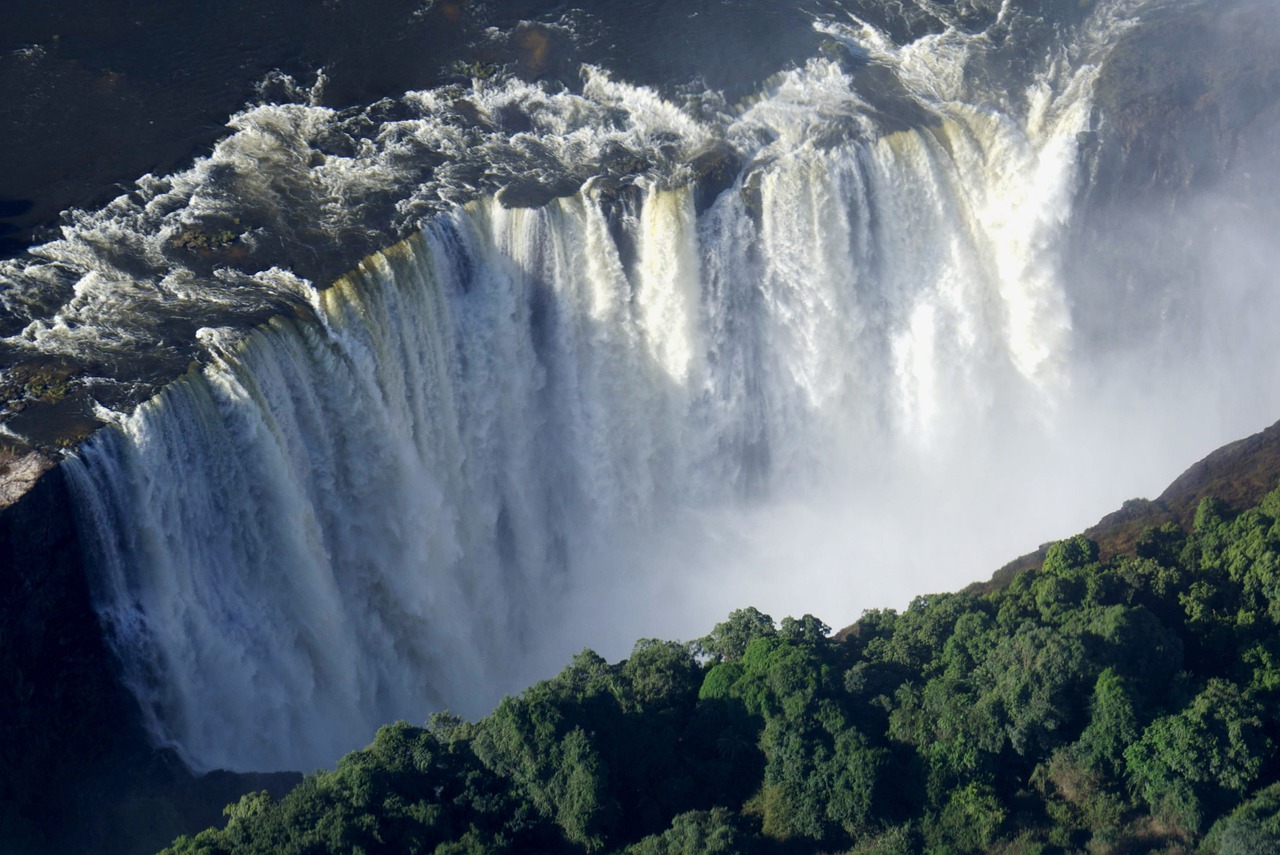
Victoria Falls, one of the world’s most awe-inspiring waterfalls, is located on the Zambezi River, which forms the natural border between Zimbabwe and Zambia. Known locally as Mosi-oa-Tunya—"The Smoke That Thunders"—Victoria Falls is not the tallest or the widest waterfall in the world, but it is considered the largest sheet of falling water due to its combined width of 1,708 meters (5,604 feet) and height of 108 meters (354 feet).
The falls formed over 150 million years ago during a period of volcanic activity that left behind layers of basalt rock. Over time, the flow of the Zambezi River began to exploit weak points in these rock layers, slowly cutting a series of gorges through the plateau. The current falls are actually the seventh waterfall in a series, as the river has gradually eroded upstream over millennia.
While the falls were known and revered by local tribes for centuries, it was the Scottish missionary and explorer David Livingstone who is credited with being the first European to view them in 1855. He named them "Victoria Falls" in honor of Queen Victoria of Britain. Livingstone's description captured the raw majesty of the place, calling it a scene "so lovely it must have been gazed upon by angels in their flight."
Victoria Falls is located precisely on the border between Zimbabwe and Zambia. The town of Victoria Falls lies on the Zimbabwean side, while the town of Livingstone sits on the Zambian side. Each offers unique perspectives and experiences of the falls.
-
Offers panoramic views of the entire width of the falls.
-
Home to Victoria Falls National Park, a UNESCO World Heritage Site.
-
A long-standing tourism hub with colonial-era hotels like the Victoria Falls Hotel.
-
Provides more close-up and intimate views, especially during low water seasons.
-
Home to Mosi-oa-Tunya National Park.
-
Visitors can swim in the Devil’s Pool, a natural rock pool at the edge of the falls.
Travelers can easily cross the Victoria Falls Bridge, which connects the two towns and countries. A visa or entry permit may be required depending on nationality, but both nations offer a univisa option for easier tourist movement.
The region around Victoria Falls is a wildlife-rich paradise, offering excellent opportunities for game viewing, birdwatching, and luxury safari experiences.
-
The Elephant Camp: Located just 10 km from Victoria Falls, it offers luxury tented suites with private plunge pools and views of the Batoka Gorge.
-
Victoria Falls River Lodge: Situated inside Zambezi National Park, this lodge offers boat safaris, game drives, and a romantic riverside setting.
-
Matetsi Victoria Falls: A luxury lodge along the Zambezi River with its own private game reserve.
-
Tongabezi Lodge: An exclusive retreat offering riverfront cottages and romantic treehouses.
-
Toka Leya Camp: Located in Mosi-oa-Tunya National Park, it offers eco-luxury accommodations and is just 12 km from the falls.
-
Chundukwa River Lodge: Known for its tranquil setting and horse-riding safaris.
In addition to safaris, the area is famous for:
-
White-water rafting on the Zambezi River.
-
Bungee jumping from the Victoria Falls Bridge.
-
Helicopter and microlight flights over the falls.
Zimbabwe was once part of the region known as Southern Rhodesia, a British colony named after Cecil Rhodes, a British imperialist and businessman. In 1923, Southern Rhodesia became a self-governing colony under British oversight.
In 1965, Prime Minister Ian Smith of Rhodesia issued a Unilateral Declaration of Independence (UDI) from Britain, attempting to maintain white minority rule. This act was declared illegal by the British government and the international community.
The following decades were marked by armed struggle:
-
ZANU (Zimbabwe African National Union), led by Robert Mugabe, and
-
ZAPU (Zimbabwe African People's Union), led by Joshua Nkomo, fought against the Rhodesian regime.
The conflict culminated in the Lancaster House Agreement in 1979, leading to internationally recognized independence.
On April 18, 1980, the country officially became the Republic of Zimbabwe, with Robert Mugabe as its first Prime Minister. The transition marked the end of nearly a century of colonial and minority rule.
Zambia was formerly known as Northern Rhodesia, also under British colonial rule. Unlike Zimbabwe, Zambia transitioned to independence through diplomatic negotiations rather than armed conflict.
-
Gained full independence on October 24, 1964.
-
First President: Kenneth Kaunda, a prominent figure in African liberation movements.
Both countries:
-
Share deep cultural and historical ties.
-
Have collaborated on tourism initiatives around Victoria Falls.
-
Struggle with economic and political challenges but remain central to Southern Africa's identity.
Victoria Falls is more than a majestic waterfall—it is a geological marvel, a historical landmark, and a symbol of transformation. The shared stewardship between Zimbabwe and Zambia has turned the area into a beacon for ecotourism, conservation, and cultural pride.
From the thundering mists of Mosi-oa-Tunya to the echoes of political revolution in Rhodesia and Northern Rhodesia, this region embodies both the power of nature’s grandeur and the resilience of its people. Whether you arrive for a safari in the Zambezi wilderness, a plunge into Devil’s Pool, or a walk across the Victoria Falls Bridge, you are partaking in a legacy that is as timeless as the waters that fall.