






Vietnam
Its History, Culture, and Legacy
6/29/2025
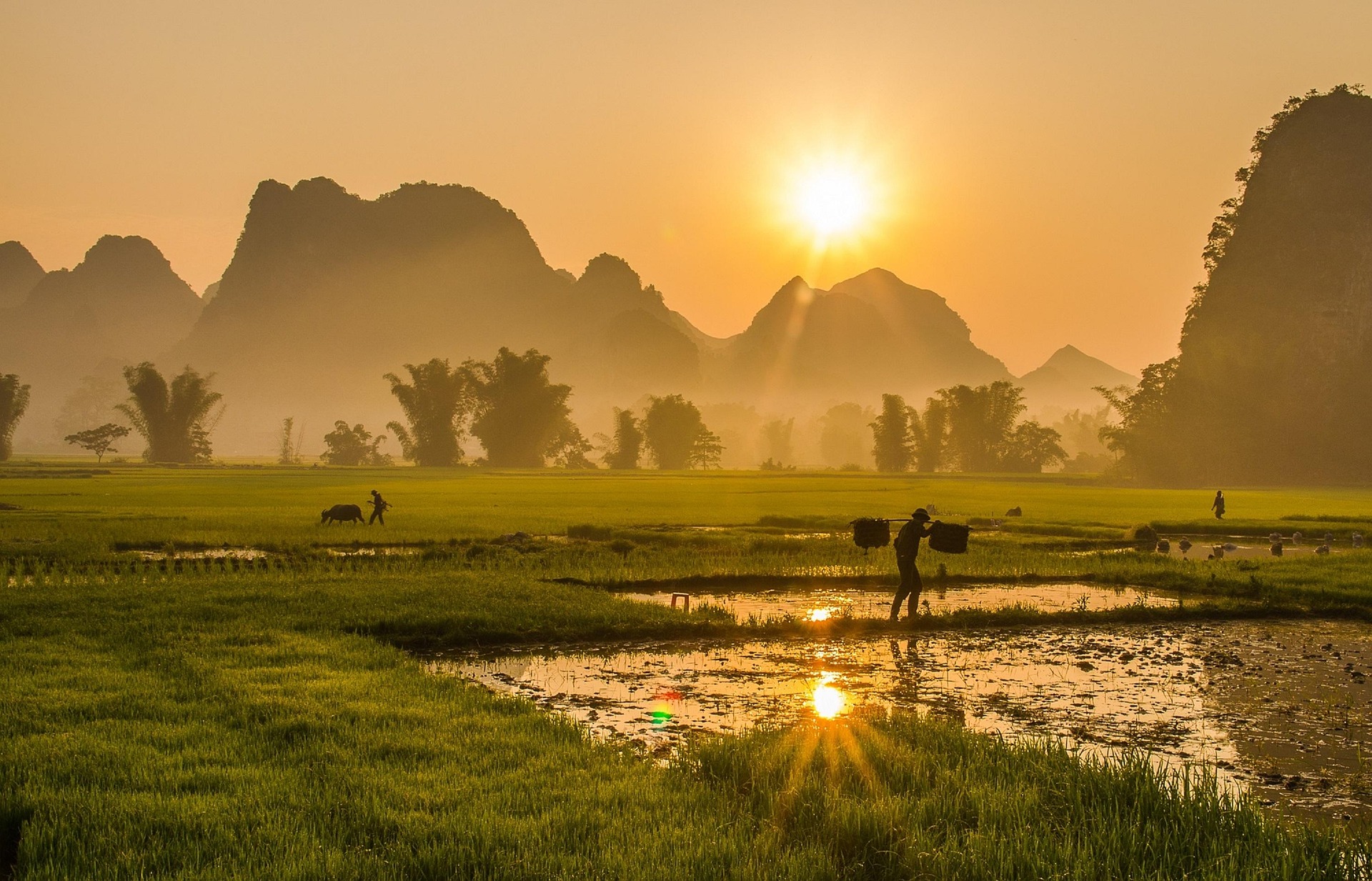
Long before the establishment of modern Vietnam or its division into North and South, the region we now recognize as South Vietnam was inhabited by indigenous Austroasiatic and Malayo-Polynesian peoples. The most prominent early civilization was Funan, which thrived from the 1st to 6th centuries in what is now the Mekong Delta. It was followed by Chenla and later the Khmer Empire, whose reach extended into what is now southern Vietnam.
In the 17th century, Vietnamese settlers from the north, under the direction of the Nguyễn Lords, began a steady southward expansion known as Nam Tiến (Southern March). They assimilated or displaced Khmer and Cham populations and gradually brought southern territories under Vietnamese control. By the 18th century, these lands formed the foundation of what would become modern South Vietnam.
In 1802, Nguyễn Phúc Ánh, having defeated the Tay Son rebels, proclaimed himself Emperor Gia Long, founding the Nguyễn Dynasty, which unified Vietnam for the first time in centuries. He established his capital in Huế, a city that straddles central Vietnam but deeply influenced the southern region politically and culturally.
While Gia Long and his successors ruled a unified Vietnam, tensions between north and south remained. The South—more open to trade and foreign influence due to its proximity to maritime routes—developed a different character compared to the more conservative, Confucian north.
The seeds of division were sown during the French colonization of Vietnam in the mid-19th century. France invaded the southern provinces in the 1850s and soon established Cochinchina, the first French colony in Vietnam, centered in Saigon (modern-day Ho Chi Minh City). This was distinct from Annam (central Vietnam) and Tonkin (north), which were protectorates rather than full colonies.
The French heavily invested in southern Vietnam’s infrastructure, creating plantations, railways, and schools modeled on French systems. Catholicism spread, and Saigon emerged as a vibrant, cosmopolitan city. However, French colonialism also brought land exploitation, forced labor, and repression, spurring resistance movements throughout the country.
The struggle against colonial rule culminated in the rise of Ho Chi Minh, a revolutionary inspired by Marxism-Leninism and anti-colonial nationalism. In 1945, after Japan’s surrender in World War II, Ho declared Vietnam's independence in Hanoi, forming the Democratic Republic of Vietnam (North Vietnam).
The French, unwilling to relinquish control, returned to reassert dominance, sparking the First Indochina War (1946–1954). It ended with the Battle of Dien Bien Phu, a stunning Vietnamese victory, and the Geneva Accords, which temporarily divided Vietnam at the 17th parallel, with Ho Chi Minh controlling the North and the South under a separate, Western-backed government.
The Republic of Vietnam (South Vietnam) was officially established in 1955, led by President Ngo Dinh Diem, a Catholic and staunch anti-communist. While the South had U.S. support, it was riddled with political instability, coups, and internal corruption.
The North, led by Ho Chi Minh and supported by China and the Soviet Union, sought to reunify the country under communist rule. This led to the Vietnam War (1955–1975), a brutal conflict marked by guerrilla warfare, widespread destruction, and deep ideological division.
Despite massive U.S. military involvement, South Vietnam fell in April 1975 with the capture of Saigon. The city was renamed Ho Chi Minh City, and the country was officially reunited under communist control as the Socialist Republic of Vietnam.
Despite decades of war, the southern region retained a distinct cultural identity. Its people are known for being more open, entrepreneurial, and less rigidly Confucian than their northern counterparts. Southern Vietnamese dialects are softer and more melodic, and its people often emphasize personal freedom and economic flexibility.
Festivals like Tet (Vietnamese New Year) are celebrated with unique southern customs, and Buddhist, Cao Dai, and Hoa Hao religious communities have a strong presence in the south. Saigon was once dubbed the “Pearl of the Orient” for its lively café culture, French colonial architecture, and bustling nightlife.
South Vietnam is a food lover’s paradise. Its fertile land and warm climate yield an abundance of rice, fruits, and vegetables, making its cuisine among the richest in Vietnam.
Popular dishes include:
-
Phở Nam – Southern-style beef noodle soup, typically sweeter than its northern counterpart.
-
Bánh xèo – Crispy savory pancakes filled with pork, shrimp, and bean sprouts.
-
Gỏi cuốn – Fresh spring rolls with shrimp, herbs, and vermicelli.
-
Hủ tiếu – A flavorful noodle soup influenced by Chinese and Khmer cooking.
The South is also known for its tropical fruits such as mangosteen, dragon fruit, durian, and rambutan, often sold in vibrant floating markets like Cái Răng in Cần Thơ.
After 1975, the South suffered from postwar hardship, political purges, and economic decline due to forced collectivization. However, with the introduction of Đổi Mới (economic renovation) reforms in 1986, Vietnam transitioned to a socialist-oriented market economy.
Today, Ho Chi Minh City is Vietnam’s economic powerhouse, accounting for a significant portion of the nation’s GDP. The south leads in manufacturing, foreign investment, tech startups, and export industries. Its ports, industrial zones, and proximity to the Mekong River make it a hub for commerce.
Tourism, too, has flourished, with millions visiting each year to explore its historic sites, beaches, and cultural attractions.
-
Ho Chi Minh City (Saigon)
-
A blend of colonial history, skyscrapers, street food, and motorbike chaos. Key sites include the War Remnants Museum, Reunification Palace, and Ben Thanh Market.
-
-
Mekong Delta
-
A maze of rivers, canals, and floating markets. Explore cities like Can Tho and My Tho, and experience river life on a sampan boat.
-
-
Cu Chi Tunnels
-
An elaborate network of underground tunnels used by Viet Cong fighters, located just outside Saigon.
-
-
Vung Tau
-
A seaside escape from city life, known for its beaches and fresh seafood.
-
-
Phu Quoc Island
-
A tropical island with white-sand beaches, coral reefs, and luxurious resorts.
-
-
Da Lat
-
A former French hill station with pine forests, waterfalls, and cool mountain air—a romantic getaway for locals and tourists alike.
-
-
Ben Tre
-
The heart of coconut country, offering eco-tourism, boat rides through mangroves, and peaceful rural homestays.
- Hue
South Vietnam is more than just a historical battlefield—it is a land of vibrant culture, culinary brilliance, resilient people, and economic dynamism. From its ancient dynasties to its colonial past, from war and division to unification and growth, the southern region stands today as a vital thread in Vietnam’s complex national fabric.
As Vietnam continues to emerge on the global stage, South Vietnam remains a beacon of what the country can offer—a place of memory, movement, and infinite discovery.
Since 1989, First Cabin Travel has offered luxury-styled itineraries to unique and varied destinations with the mainstay of bookings derived from repeat clientele and their enthusiastic referrals. Your passport to excellence - CA Reg 2016168-40